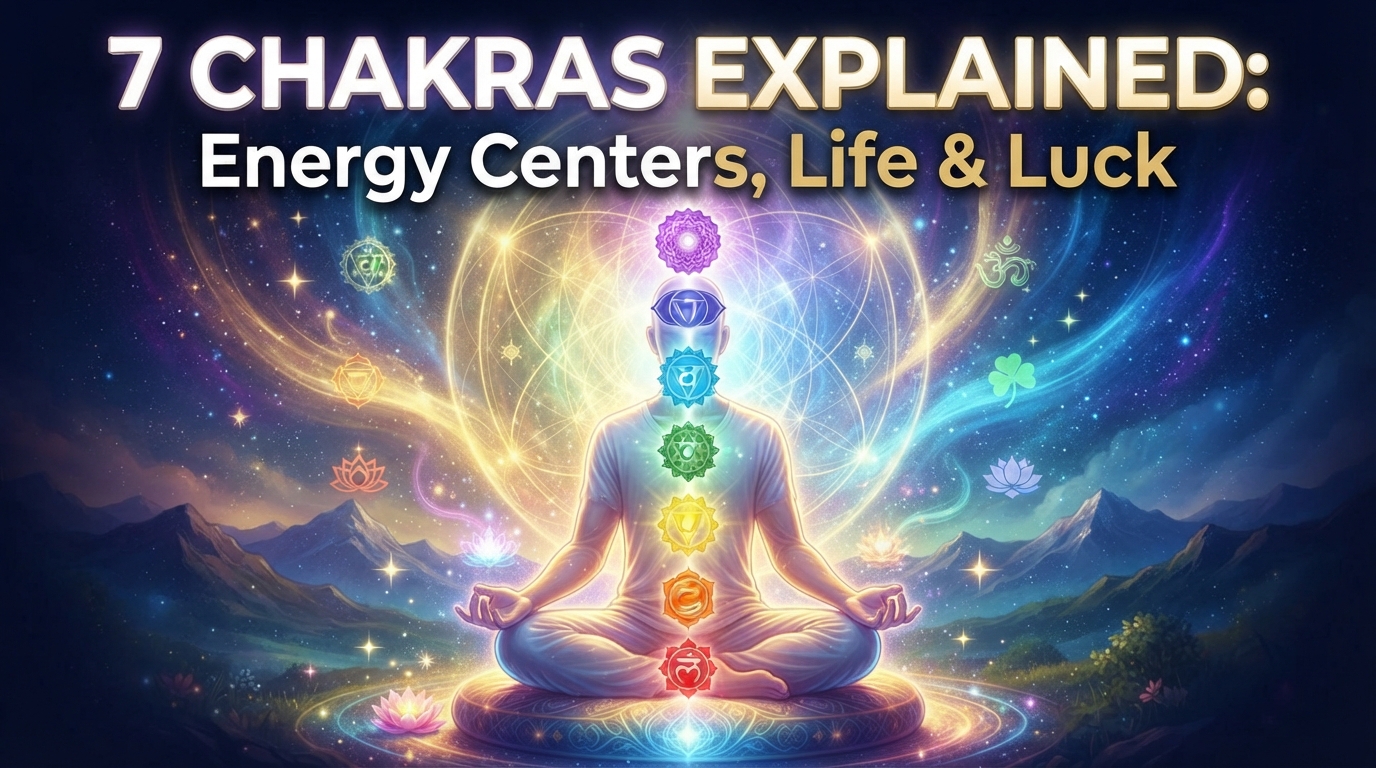
Chakra Balancing: A Complete Guide to Energy Flow, Spiritual Growth, and Abundance
Introduction: What Is Chakra Balancing?
Have you ever experienced a sudden burst of creativity, a stronger sense of intuition, or the opposite—a feeling of being disconnected and ungrounded? In spiritual traditions, these experiences are often associated with the chakras, seven commonly recognized energy centers described in Indian yogic and spiritual traditions.
The chakra system is traditionally used as a framework for understanding the relationship between the body, emotions, mind, and spiritual awareness. Each chakra is associated with different qualities, such as security, creativity, confidence, love, communication, intuition, and spiritual connection.
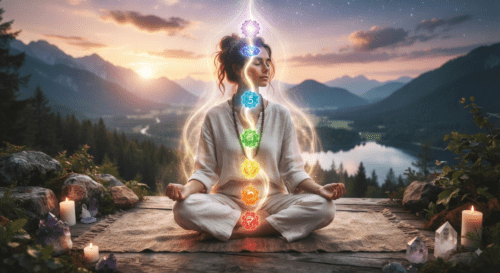
When these qualities feel balanced, many people describe a greater sense of inner stability and clarity. When they feel out of balance, it may be reflected in emotional stress, difficulty expressing oneself, insecurity, or a general sense of being stuck.
Chakra balancing is therefore best understood as a practice of self-awareness rather than a quick fix. Through meditation, yoga, breathwork, mindful movement, sound, and other reflective practices, you can create more space to understand yourself and cultivate a greater sense of harmony.
In this guide, we’ll explore the seven major chakras, what each one traditionally represents, and practical ways to incorporate chakra-balancing practices into everyday life.
The Seven Chakras Explained: Understanding Your Energetic Blueprint
Before beginning chakra-balancing practices, it helps to understand the traditional qualities associated with each chakra. The seven chakras are commonly described by their location, symbolic color, element, and psychological themes.
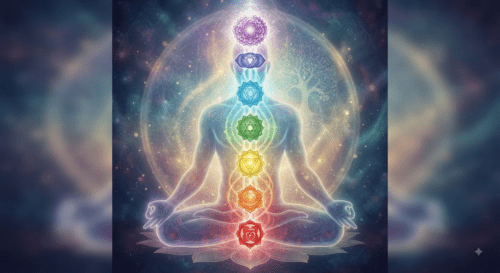
1. Root Chakra (Muladhara)
Located at the base of the spine, the Root Chakra represents stability, security, survival, and a sense of belonging.
When this area feels balanced, you may feel more grounded, present, and secure in your everyday life. When it feels unsettled, you might experience fear, restlessness, insecurity, or difficulty feeling at home in your surroundings.
- Location: Base of the spine
- Color: Red
- Element: Earth
- Associated themes: Security, stability, grounding, survival
Grounding activities such as walking in nature, mindful breathing, and establishing consistent daily routines are often used to support Root Chakra practices.
2. Sacral Chakra (Svadhisthana)
The Sacral Chakra is traditionally located below the navel and is associated with creativity, pleasure, emotional expression, relationships, and adaptability.
A balanced Sacral Chakra is often connected with the ability to enjoy life, express emotions, and remain flexible when circumstances change. An imbalance may be described as emotional suppression, creative frustration, or excessive dependence on external validation.
- Location: Lower abdomen
- Color: Orange
- Element: Water
- Associated themes: Creativity, pleasure, emotions, flexibility
Creative activities such as dancing, painting, writing, or simply allowing yourself to experience emotions without judgment can be useful ways to explore this area.
3. Solar Plexus Chakra (Manipura)
Located around the upper abdomen, the Solar Plexus Chakra is traditionally associated with confidence, personal power, motivation, and willpower.
When these qualities are strong, you may find it easier to make decisions, establish boundaries, and take meaningful action toward your goals. When they feel diminished, self-doubt, indecision, or a lack of direction may become more noticeable.
- Location: Upper abdomen
- Color: Yellow
- Element: Fire
- Associated themes: Confidence, motivation, willpower, personal power
Goal-setting, physical exercise, and practicing small acts of self-discipline can complement Solar Plexus Chakra work.
4. Heart Chakra (Anahata)
The Heart Chakra sits at the center of the chest and is traditionally viewed as the meeting point between the lower and upper chakras.
It is associated with love, compassion, empathy, forgiveness, and emotional connection. When these qualities are cultivated, relationships may feel more open and balanced. Emotional wounds, resentment, or difficulty trusting others are sometimes interpreted as signs that the Heart Chakra needs attention.
- Location: Center of the chest
- Color: Green
- Element: Air
- Associated themes: Love, compassion, empathy, forgiveness
Heart-centered practices can include gratitude, compassion meditation, journaling, and spending meaningful time with people who make you feel supported.
5. Throat Chakra (Vishuddha)
The Throat Chakra represents communication, authenticity, and self-expression.
A balanced Throat Chakra is traditionally associated with expressing your thoughts and needs honestly while also listening to others. When communication becomes difficult, you may find yourself holding back, avoiding difficult conversations, or struggling to explain how you truly feel.
- Location: Throat
- Color: Blue
- Element: Ether or space
- Associated themes: Communication, truth, expression, authenticity
Writing in a journal, speaking honestly about your feelings, singing, or practicing mindful communication can help you become more aware of how you express yourself.
6. Third Eye Chakra (Ajna)
Located between the eyebrows, the Third Eye Chakra is traditionally associated with intuition, insight, wisdom, and inner awareness.
Rather than simply referring to supernatural perception, Third Eye practices can also be approached as exercises in reflection and intuitive awareness. When your mind is constantly distracted, it can become difficult to recognize your own thoughts, patterns, and instincts.
- Location: Between the eyebrows
- Color: Indigo
- Element: Light
- Associated themes: Intuition, insight, wisdom, awareness
Meditation, quiet reflection, visualization, and limiting unnecessary distractions can create space for deeper self-observation.
7. Crown Chakra (Sahasrara)
The Crown Chakra is traditionally located at the top of the head and is associated with spiritual awareness, consciousness, wisdom, and a sense of connection to something greater than the individual self.
For some people, this may be experienced through meditation or spiritual practice. For others, it may simply mean developing a broader perspective on life and feeling connected to a larger sense of meaning.
- Location: Crown of the head
- Color: Violet or white
- Element: Thought or consciousness
- Associated themes: Spirituality, awareness, wisdom, connection
Meditation, contemplation, prayer, or spending quiet time reflecting on your values can support practices associated with the Crown Chakra.
Why Chakra Balancing Can Support a More Harmonious Life
The idea of chakra balancing is often connected with the concept of energy flow. Rather than thinking of “energy” only in a literal physical sense, you can also use the chakra system as a symbolic way to examine different areas of your life.
For example, feeling insecure about finances may encourage you to reflect on the themes traditionally associated with the Root Chakra. Difficulty setting boundaries may bring attention to the Solar Plexus Chakra, while problems expressing emotions may lead you to explore the Throat or Heart Chakra.
In this sense, chakra work can become a structured form of self-reflection.
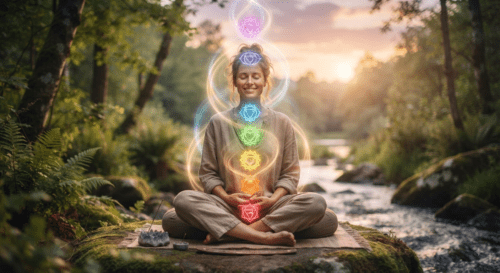
Moving Through Emotional and Mental Blockages
Imagine your inner life as a system of interconnected streams. When stress, fear, or unresolved emotions build up in one area, they can influence other parts of your life.
Meditation, yoga, breathwork, journaling, and mindful movement can provide opportunities to slow down and notice these patterns.
The goal is not necessarily to “fix” yourself. Instead, it is to become more aware of what you are experiencing and develop healthier ways of responding to it.
Chakra Balancing and Manifestation
Chakras are also frequently discussed in manifestation practices.
The traditional associations provide an interesting framework for examining different goals. The Root Chakra can represent security and stability, the Heart Chakra can symbolize love and connection, and the Solar Plexus Chakra can represent confidence and purposeful action.
From this perspective, manifestation does not have to mean waiting for something external to magically appear. It can involve clarifying what you want, changing your mindset, and taking consistent action.
For example, someone who wants to advance professionally may benefit from strengthening confidence, communicating more clearly, setting realistic goals, and becoming comfortable with taking initiative. These practical changes can naturally align with the qualities traditionally associated with the Solar Plexus Chakra.
Chakras and the Idea of Vibrational Energy
Chakras are sometimes described as energy centers that resonate at particular frequencies. This idea has become especially popular in modern sound-healing and spiritual communities.
Practices involving singing bowls, tuning forks, chanting, or music are often used to create a calming environment and encourage meditation. However, claims that specific frequencies can medically repair or “recalibrate” individual chakras should be treated as spiritual or symbolic beliefs rather than established scientific facts.
The potential value of sound practices may instead come from relaxation, focused attention, rhythmic breathing, and the overall meditative experience.
Practical Ways to Balance Your Chakras
You do not need years of spiritual experience to explore chakra balancing. Simple practices can be incorporated into an ordinary daily routine.
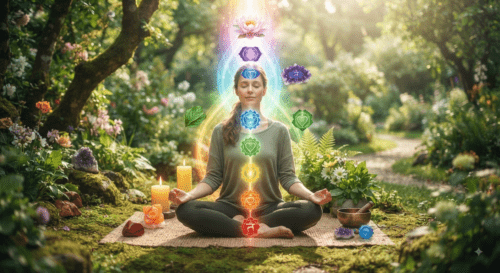
Mindfulness and Meditation
Meditation is one of the simplest ways to develop greater awareness of your thoughts, emotions, and physical sensations.
You can work with one chakra at a time by focusing your attention on its traditional location and visualizing its associated color.
For example, when focusing on the Root Chakra, imagine a warm red light at the base of your spine while taking slow, comfortable breaths.
The purpose is not to force a particular sensation. Instead, use visualization as a way to settle your attention and connect with the qualities represented by that chakra.
Yoga and Mindful Movement
Yoga has long been connected with chakra traditions. Different postures can also encourage grounding, relaxation, strength, flexibility, and focused awareness.
Mountain Pose can be used as a simple grounding exercise, while heart-opening postures can encourage awareness around the chest and shoulders.
You can also choose movement based on what you currently need. Gentle stretching may be appropriate when you feel tense, while stronger physical movement may help when you feel stagnant or restless.
Colors and Crystals
Color symbolism is an important part of many modern chakra practices.
You might incorporate a chakra’s traditional color into your surroundings, clothing, artwork, or meditation space. Red is commonly associated with the Root Chakra, orange with the Sacral Chakra, yellow with the Solar Plexus, and green with the Heart Chakra.
Crystals are also widely used in spiritual practices. For example, green aventurine is sometimes associated with the Heart Chakra.
There is no scientific evidence that a particular crystal can physically “open” or repair a chakra, but using symbolic objects can make meditation more intentional and personally meaningful.
Sound, Mantras, and Affirmations
Sound can be another useful tool for creating a focused meditation practice.
You can listen to calming music, use singing bowls, practice chanting, or repeat affirmations connected to the qualities you want to cultivate.
For example:
- Root Chakra: “I am safe, grounded, and supported.”
- Sacral Chakra: “I allow myself to create and experience joy.”
- Solar Plexus Chakra: “I trust myself to take purposeful action.”
- Heart Chakra: “I give and receive love with an open heart.”
- Throat Chakra: “I express myself honestly and clearly.”
- Third Eye Chakra: “I trust myself to observe and understand.”
- Crown Chakra: “I am open to wisdom and a deeper sense of connection.”
The effectiveness of an affirmation often depends less on the words themselves and more on whether they encourage reflection and support healthier patterns of thinking.
A Simple 7-Day Chakra Balancing Routine
If you are new to chakra work, starting with a short daily practice can make the process easier.
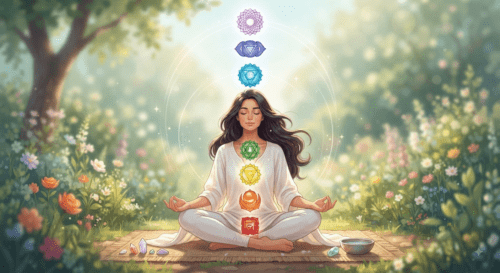
Day 1 — Root Chakra: Spend 10 minutes walking slowly and paying attention to your surroundings.
Day 2 — Sacral Chakra: Do something creative without worrying about whether the result is “good.”
Day 3 — Solar Plexus Chakra: Choose one small goal and complete it without unnecessary delay.
Day 4 — Heart Chakra: Write down three things you appreciate about yourself or someone else.
Day 5 — Throat Chakra: Express one thought or feeling that you have been avoiding.
Day 6 — Third Eye Chakra: Spend 10 minutes in silence without your phone or other distractions.
Day 7 — Crown Chakra: Meditate, reflect, pray, or simply spend quiet time considering what gives your life meaning.
After seven days, reflect on how your mood, thoughts, relationships, and sense of direction have changed.
Chakra Balancing FAQ
| Question | Answer |
|---|---|
| What is chakra balancing? | Chakra balancing is a spiritual or reflective practice based on the traditional chakra system. It uses techniques such as meditation, yoga, breathwork, visualization, and sound. |
| How many main chakras are there? | The modern chakra system commonly refers to seven major chakras, from the Root Chakra at the base of the spine to the Crown Chakra at the top of the head. |
| How do I know if my chakras are “blocked”? | There is no scientifically established test for chakra blockages. In spiritual practice, people often use feelings such as insecurity, emotional tension, difficulty communicating, or lack of direction as prompts for self-reflection. |
| Can chakra balancing improve physical health? | Chakra practices may support relaxation and general well-being, but they should not replace professional medical care or proven treatments for health conditions. |
| How long does chakra balancing take? | There is no fixed timeframe. Even a few minutes of meditation, mindful movement, or reflection each day can become a useful personal practice. |
| Can chakra balancing help with manifestation? | Many spiritual traditions connect chakras with manifestation. A practical approach is to use the chakra framework to clarify your goals, develop supportive habits, and take purposeful action. |
| Are chakra frequencies scientifically proven? | The idea that individual chakras have specific healing frequencies is not established by mainstream science. Sound and music can nevertheless be useful for relaxation and meditation. |
Conclusion: Turn Chakra Awareness Into Everyday Growth
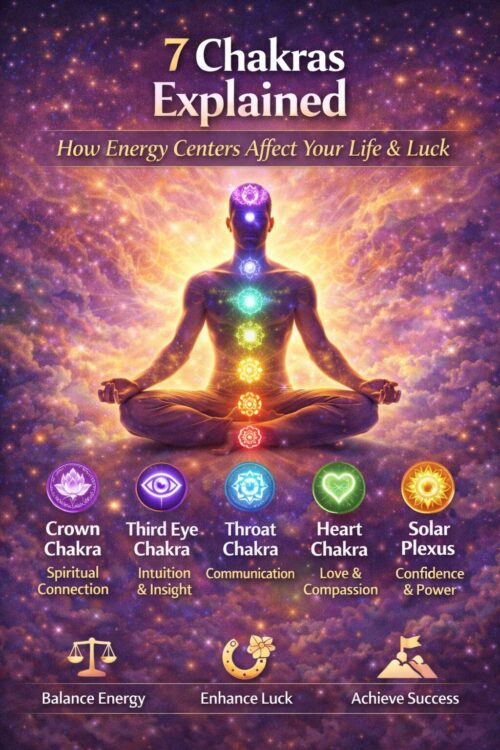
Chakra balancing can be more than a spiritual ritual. When approached thoughtfully, it can become a practical framework for understanding your emotions, values, habits, relationships, and personal goals.
The seven chakras offer symbolic themes that can encourage you to ask meaningful questions. Do you feel secure in your life? Are you allowing yourself to be creative? Do you trust your ability to make decisions? Can you communicate honestly? Are you making space for intuition, reflection, and a sense of purpose?
You do not have to believe that chakras literally control every aspect of your life to benefit from these questions.
Meditation can teach you to slow down. Yoga can reconnect you with your body. Journaling can reveal recurring patterns. Affirmations can help you focus on the qualities you want to develop. And mindful daily actions can gradually turn those intentions into real changes.
Ultimately, chakra balancing is a journey rather than a destination. By using the chakra system as a tool for self-awareness and intentional living, you can create more space for balance, clarity, personal growth, and a deeper connection with the life you want to build.