
The Journey to Higher Awareness: A Complete Guide to Spiritual Ascension and Expanded Consciousness
Introduction: What Does It Mean to Expand Your Consciousness?
Have you ever felt that there is more to life than what you can see on the surface?
Many people reach a point where everyday routines, achievements, and external goals no longer feel completely satisfying. This can lead to a deeper search for meaning, inner peace, and a greater understanding of oneself. In spiritual traditions, this kind of inner transformation is often described as spiritual ascension or expanded consciousness.

These ideas do not necessarily refer to escaping ordinary life or reaching some distant supernatural state. Instead, they can be understood as a gradual shift in the way you perceive yourself, other people, and the world around you.
As awareness expands, you may begin to question old beliefs, recognize emotional patterns, become less controlled by fear, and develop a stronger sense of connection with life as a whole. The journey is deeply personal, and there is no single timeline or universal experience.
In this guide, we will explore what spiritual ascension and expanded consciousness mean, the changes that may occur along the way, and practical ways to cultivate greater awareness in everyday life.
What Are Spiritual Ascension and Expanded Consciousness?
Although the terms are often used together, they describe slightly different aspects of the same spiritual journey.

Expanded Consciousness: A Broader Way of Seeing Life
Expanded consciousness can be understood as a state of heightened awareness in which you become more conscious of your thoughts, emotions, beliefs, relationships, and surroundings.
Instead of automatically reacting to everything that happens, you begin to observe your inner world with greater clarity. You may notice how past experiences influence your behavior or how fear and limiting beliefs shape your decisions.
This broader awareness can also change the way you relate to other people. Rather than seeing yourself as completely separate from everyone else, you may develop a stronger sense of empathy and interconnectedness.
Compassion, intuition, patience, and emotional awareness can become more important than they were before.
Expanded consciousness does not mean abandoning reason or ordinary responsibilities. It is more about developing a wider perspective while remaining grounded in everyday life.
Spiritual Ascension: The Process of Inner Transformation
Spiritual ascension generally refers to the process of moving toward greater awareness and inner development.
Different spiritual traditions describe this process in different ways. Some associate it with raising one’s vibration or energetic frequency, while others focus on awakening, self-realization, or liberation from limiting patterns.
In practical terms, the journey often involves becoming more aware of fear, attachment, judgment, and unconscious habits. You gradually learn to respond to life with greater intention rather than simply reacting from old conditioning.
Meditation, self-reflection, gratitude, compassion, and mindful living can all support this process.
Rather than becoming a completely different person, spiritual growth can be seen as uncovering a deeper and more authentic part of yourself.
The Transformative Stages of the Ascension Journey
Spiritual growth rarely happens in a perfectly straight line. Some periods may bring clarity and peace, while others may bring uncertainty or emotional discomfort.
The following stages are common themes often associated with the journey.

1. Questioning Old Beliefs
The journey often begins with curiosity.
You may start questioning beliefs that you previously accepted without much thought. This can include ideas about success, relationships, identity, happiness, or what gives life meaning.
Sometimes this stage is triggered by a major life change. At other times, it begins quietly with the feeling that something inside you is asking for a different direction.
Questioning does not mean rejecting everything from your past. It means becoming willing to examine your beliefs and decide which ones genuinely reflect who you are today.
2. Becoming Aware of the Ego
Another important part of spiritual development is recognizing the influence of the ego.
The ego is not necessarily something that must be destroyed. It is part of our psychological identity and helps us function in everyday life. Problems can arise when we become completely identified with our roles, achievements, fears, or social identities.
For example, you might unconsciously define yourself by your career, financial situation, appearance, nationality, relationships, or social status.
As awareness grows, you may begin to recognize that these are aspects of your identity rather than the entirety of who you are.
This shift can create a greater sense of freedom. You become less dependent on external validation and more comfortable with your authentic self.
3. Moving Toward Connection and Compassion
As self-awareness deepens, many people experience a stronger sense of connection with others.
You may become more sensitive to the emotions and experiences of people around you. Judgment can gradually give way to curiosity and understanding.
This is sometimes described as unity consciousness—the feeling that life is deeply interconnected rather than divided into isolated individuals.
You do not have to abandon your individuality to experience this sense of connection. Instead, you can recognize that being an individual and being connected to others are not contradictory.
Compassion becomes a natural extension of this awareness.
4. Embracing Love Without Attachment
Love is often described as one of the central qualities of spiritual awakening.
However, spiritual love does not necessarily mean constant happiness or emotional intensity. It can be understood as a deeper willingness to accept yourself and others without trying to control everything.
This kind of love includes compassion, forgiveness, patience, and respect for the experiences of others.
It also includes self-compassion.
You may begin to understand that personal growth does not require you to be perfect. Mistakes, difficult emotions, and periods of uncertainty can all become part of the learning process.
Practical Ways to Expand Your Awareness
Spiritual growth does not have to involve complicated rituals or dramatic experiences. Small, consistent practices can make a meaningful difference.

Meditation and Mindfulness
Meditation is one of the simplest ways to develop greater awareness.
You do not need to meditate for an hour every day. Beginning with five to ten minutes can be enough to establish a regular practice.
Sit quietly and bring your attention to your breathing. When thoughts appear, notice them without immediately following them.
Over time, this practice can help you recognize the difference between having a thought and automatically believing or acting on that thought.
Mindfulness can also be practiced during ordinary activities such as eating, walking, showering, or talking with another person.
The goal is not to eliminate thoughts. It is to become more present with what is happening.
Journaling and Self-Inquiry
Writing can reveal patterns that are difficult to notice when thoughts remain inside your head.
Try asking yourself questions such as:
- What am I currently afraid of?
- Which beliefs about myself might be limiting me?
- What situations repeatedly trigger the same emotional reaction?
- What activities make me feel genuinely alive?
- What would I change if I were less concerned about other people’s expectations?
You do not need to find perfect answers.
The purpose of self-inquiry is to create space for honest reflection. With time, you may begin to recognize recurring patterns and make more conscious choices.
Spending Time in Nature
Nature can provide a powerful opportunity to slow down and reconnect with the present moment.
A walk through a forest, time beside the ocean, or even a few quiet minutes in a garden can interrupt the constant stimulation of modern life.
Instead of trying to achieve anything, simply observe your surroundings.
Notice the sounds, movement, temperature, light, and sensations around you.
This simple practice can help you feel more grounded and remind you that you are part of a much larger natural world.
Gratitude and Conscious Living
Gratitude can gradually change what you pay attention to.
Rather than focusing exclusively on what is missing, you begin noticing what is already meaningful in your life.
You might write down three things you appreciate each evening, express gratitude to someone directly, or simply pause during the day to recognize a small positive experience.
Gratitude does not mean ignoring genuine problems. Instead, it can help create a more balanced perspective while you work through those challenges.
Exploring Spiritual Practices With Discernment
Some people are also drawn to practices such as Reiki, chakra meditation, breathwork, sound meditation, or energy-based traditions.
These practices can be meaningful as forms of relaxation, reflection, or spiritual exploration.
At the same time, it is helpful to approach extraordinary claims with discernment. Spiritual practices can support personal reflection without requiring you to accept every claim literally.
A balanced approach allows you to remain open-minded while also thinking critically.
What Changes Might You Notice as Awareness Deepens?
Everyone experiences spiritual development differently, so there is no universal list of signs.

However, some people report changes such as:
Greater Emotional Awareness
You may become more conscious of your emotions instead of automatically suppressing or expressing them.
Rather than asking, “How can I get rid of this feeling?” you may begin asking, “What is this feeling trying to tell me?”
Less Dependence on External Validation
As your sense of self becomes stronger, approval from others may become less important.
You can still appreciate recognition and meaningful relationships, but your sense of worth no longer depends entirely on them.
A Greater Appreciation for Simplicity
Material success and external achievement may remain important, but they may no longer feel like the only sources of fulfillment.
Simple experiences—quiet mornings, meaningful conversations, nature, creativity, or time with loved ones—can become more valuable.
Increased Sense of Purpose
Greater self-awareness can also clarify what truly matters to you.
You may feel motivated to create, help others, improve your relationships, pursue meaningful work, or simply live more consciously.
Purpose does not always arrive as one dramatic revelation. Sometimes it develops gradually through everyday choices.
Living With Expanded Awareness
The real value of spiritual growth is not found in having extraordinary experiences. It is found in how awareness changes the way you live.

Creating Inner and Outer Harmony
When you understand your own emotional patterns, you become better equipped to communicate with others.
Instead of reacting immediately to conflict, you may pause and consider what is actually happening beneath the surface.
This can lead to healthier relationships and greater emotional stability.
Inner peace does not mean that life becomes free of problems. It means that you develop a different relationship with those problems.
Finding Joy Beyond Achievement
External accomplishments can certainly bring satisfaction, but lasting well-being cannot depend entirely on success.
Expanded awareness can help you discover forms of fulfillment that are less dependent on circumstances.
A meaningful conversation, creative expression, connection with nature, or a quiet moment of presence can become valuable in its own right.
Becoming a Conscious Participant in Your Life
With greater awareness, you may stop viewing yourself solely as someone to whom life happens.
Instead, you begin recognizing the influence of your choices, habits, attitudes, and relationships.
This does not mean that you control everything that happens. Life will always contain uncertainty and events beyond your control.
But you can become more intentional about how you respond.
That is where conscious living becomes powerful.
Frequently Asked Questions About Spiritual Ascension and Expanded Consciousness
| Question | Answer |
|---|---|
| What is spiritual ascension? | Spiritual ascension generally refers to a process of inner growth, awakening, and developing a broader awareness of yourself and life. |
| What is expanded consciousness? | Expanded consciousness describes a state of greater awareness in which you become more conscious of your thoughts, emotions, relationships, and sense of connection with the world. |
| Does spiritual ascension happen suddenly? | It can feel sudden for some people, but for many it is a gradual process that develops through reflection, life experiences, and consistent personal practices. |
| How can I expand my consciousness? | Meditation, mindfulness, journaling, self-inquiry, spending time in nature, gratitude, and conscious living are practical ways to cultivate greater awareness. |
| Does spiritual growth mean getting rid of the ego? | Not necessarily. A healthier goal is to recognize the ego without allowing it to control every thought, decision, or reaction. |
| Can spiritual ascension improve everyday life? | Greater self-awareness may help you respond to stress, relationships, and challenges with more clarity and intention. |
| Are spiritual ascension experiences the same for everyone? | No. Spiritual experiences are highly individual, and there is no single timeline or set of experiences that applies to everyone. |
| Is spiritual ascension connected to religion? | It can be, but it does not have to be. Similar ideas of awakening and inner transformation appear across many religious, philosophical, and secular traditions. |
Conclusion: The Path of Evolution Is a Return to Awareness
Spiritual ascension and expanded consciousness do not have to be viewed as distant or unreachable states.
They can simply represent an ongoing process of becoming more aware of who you are, how you think, how you relate to others, and what gives your life meaning.
The journey may involve questioning old beliefs, becoming more aware of the ego, healing emotional patterns, cultivating compassion, and learning to live with greater intention.
Meditation, mindfulness, self-inquiry, gratitude, and time in nature can all provide practical ways to support this process.
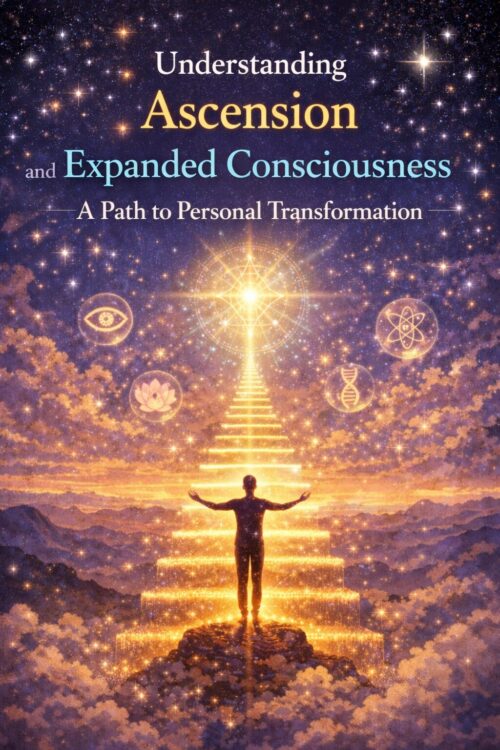
Most importantly, spiritual growth is not a competition. There is no need to compare your journey with someone else’s or force yourself to reach a particular state of consciousness.
Real transformation often happens quietly.
It can be found in the moment you pause before reacting, choose compassion instead of judgment, forgive yourself for a past mistake, or recognize the beauty of an ordinary moment.
Perhaps the deepest form of ascension is not becoming something extraordinary, but becoming fully present with the life you are already living.
As awareness expands, the world may not change overnight—but the way you see it can change profoundly.