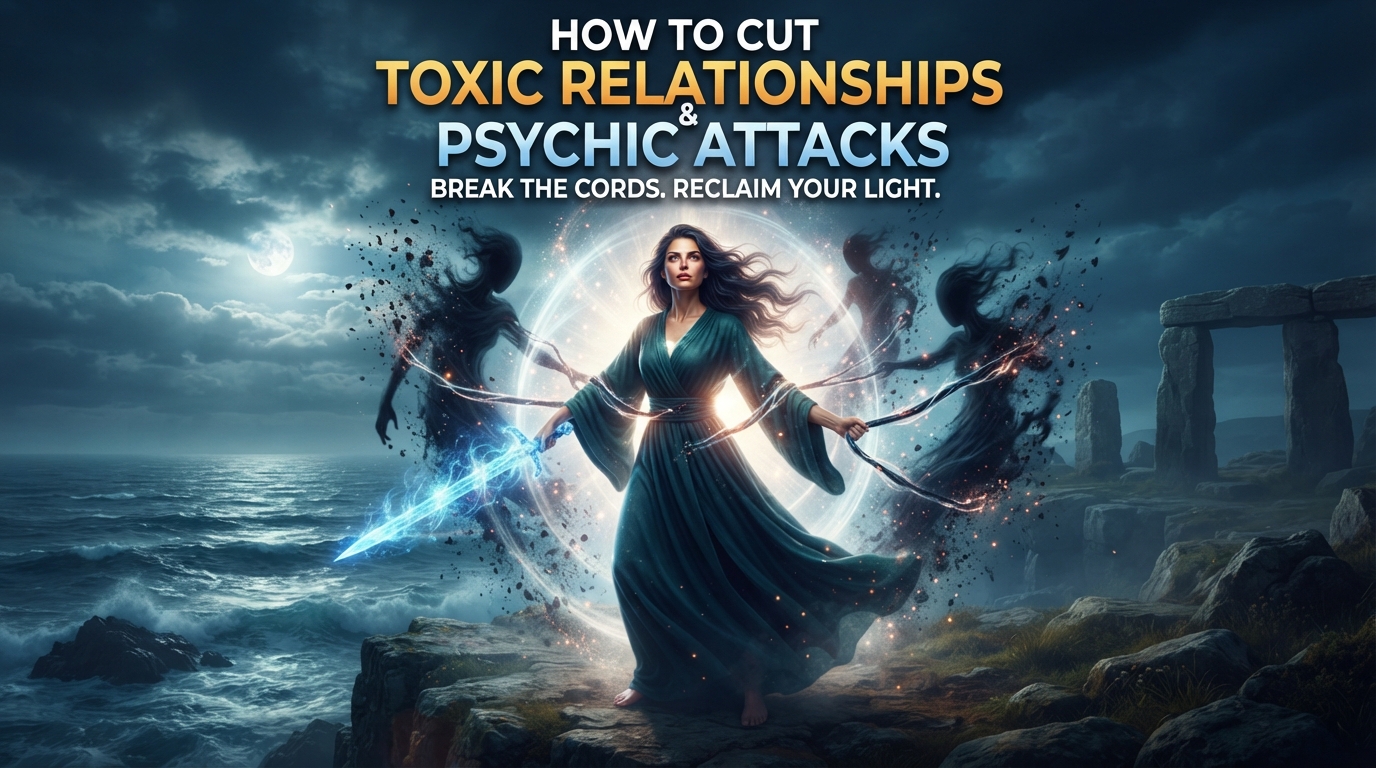
The Path to Energetic Freedom: How to Recognize, Release, and Heal from Toxic Relationships
Introduction: Understanding the Connection Between Relationships and Energy
Throughout life, we form countless relationships. Some inspire us, strengthen our confidence, and help us grow. Others, however, can leave us feeling emotionally exhausted, anxious, or disconnected from ourselves.
We often use the term toxic relationship to describe connections that repeatedly harm our emotional well-being. Spiritual traditions offer another perspective, suggesting that relationships can also create subtle energetic bonds, sometimes described as etheric cords. These invisible connections are believed to develop through emotional attachment, intense experiences, and repeated interactions.

When a relationship becomes unhealthy, we may feel as though our energy is constantly being pulled away. Some spiritual practices describe this experience in terms of energetic depletion or psychic attacks, while psychology may interpret similar experiences through stress, emotional manipulation, anxiety, or unhealthy attachment patterns.
Whatever language we use, the underlying message is valuable: our relationships can profoundly influence how we feel, think, and experience our daily lives.
This guide explores how to recognize emotionally draining connections, release unhealthy attachments, strengthen personal boundaries, and create relationships that support your well-being.
1. Recognizing the Drain: Signs of an Unhealthy Connection
The first step toward energetic freedom is recognizing when a relationship consistently leaves you feeling depleted.
A toxic relationship is not simply a relationship that occasionally becomes difficult. Healthy relationships naturally experience disagreements and periods of stress. The difference is that unhealthy relationships often develop persistent patterns of manipulation, imbalance, disrespect, or emotional exhaustion.

Emotional Manipulation and Imbalance
One of the clearest warning signs is a persistent imbalance in emotional giving and receiving.
You may constantly find yourself listening, comforting, advising, or solving problems for another person while your own needs are rarely acknowledged. The other person may repeatedly complain, manipulate your emotions, dismiss your feelings, or make you feel responsible for their happiness.
Over time, this dynamic can leave you feeling as though you have little emotional space left for yourself.
Rather than thinking of another person as literally “stealing” your energy, it can be more helpful to recognize what the relationship is doing to your emotional resources. Constant stress and emotional pressure can consume enormous amounts of mental and physical energy.
The Feeling That Something Is Wrong
Pay attention to how you consistently feel before, during, and after interactions.
Do you regularly feel tense before meeting someone? Do you experience relief when the conversation ends? Do you find yourself replaying conversations in your mind or worrying about how the other person will react?
These reactions can be important signals.
Fatigue, sadness, irritability, anxiety, and mental exhaustion do not automatically mean that someone is attacking you energetically. However, they can indicate that a relationship is placing an unhealthy level of stress on you.
Etheric Cords and Psychic Attack as Spiritual Concepts
In various spiritual traditions, etheric cords are described as subtle energetic connections between people. They may symbolize emotional bonds, attachment, unresolved experiences, or a strong exchange of attention.
In a healthy relationship, such a connection can be understood as a symbolic representation of affection, trust, and mutual support. In an unhealthy relationship, the same symbolism can represent attachment that feels difficult to release.
The concept of a psychic attack is similarly interpreted differently depending on one’s spiritual beliefs. Some people use the term to describe the feeling of being overwhelmed by another person’s anger, hostility, jealousy, or negative intentions.
Whether viewed spiritually or psychologically, the important question is not simply, “Is someone attacking my energy?” but rather:
“What is this relationship doing to my sense of peace, confidence, and well-being?”
That question brings the focus back to something you can actually influence: your own boundaries and choices.
| Feature / Aspect | Healthy Relationships | Unhealthy (Toxic) Relationships |
| Emotional Flow | Balanced giving and receiving; both people feel supported. | Chronic imbalance; one person constantly gives while the other drains. |
| Boundaries | Respected; “no” is accepted without guilt trips or manipulation. | Ignored or violated; guilt-tripping, pressure, or defensiveness. |
| Communication | Open, honest, and safe to express disagreement or vulnerability. | Manipulative, dismissive, or walking on eggshells to avoid conflict. |
| After-Effects | Feeling uplifted, understood, or calmly resolved after interaction. | Feeling drained, anxious, exhausted, or constantly replaying conversations. |
2. Reclaiming Your Power: Releasing Unhealthy Attachments
Creating physical distance from an unhealthy relationship can be an important first step. But emotional attachment does not always disappear simply because contact has ended.
This is where symbolic practices such as cord-cutting can become useful.

A Cord-Cutting Visualization
Cord-cutting can be practiced as a form of meditation and emotional visualization rather than as a literal act.
Find a quiet place where you can relax without interruption. Close your eyes and take several slow, deep breaths.
Imagine yourself standing in a peaceful environment. Then visualize the person or relationship you wish to release. Notice the invisible connection between you. You might imagine it as a thread, rope, chain, or stream of energy.
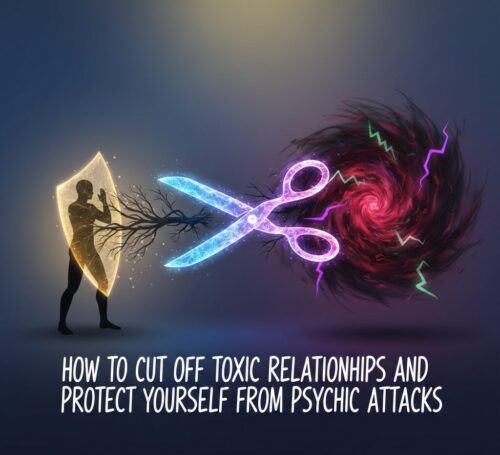
Now imagine a gentle beam of light, a pair of scissors, or another meaningful symbol separating you from this attachment.
As the connection dissolves, silently repeat:
“I release what no longer serves me. My energy, attention, and choices belong to me. I allow myself to move forward in peace.”
The purpose is not to punish or reject another person. Instead, the ritual can serve as a symbolic declaration that you are no longer allowing an unhealthy relationship to control your emotional attention.
Reinforcing Your Boundaries Through Affirmations
After releasing an attachment, it is important to develop a new internal pattern.
Simple affirmations can help reinforce the values you want to embody:
- “I am allowed to protect my peace.”
- “I deserve relationships based on mutual respect.”
- “I can say no without feeling guilty.”
- “My worth does not depend on another person’s approval.”
- “I choose relationships that support my well-being.”
The effectiveness of affirmations does not require viewing them as supernatural protection. Repeatedly directing your attention toward healthy beliefs can help reinforce self-awareness and more constructive patterns of thinking.
Cleansing Rituals and Personal Renewal
Many spiritual traditions use cleansing rituals to symbolize renewal and emotional release.
A relaxing bath, time spent in nature, meditation, journaling, or simply cleaning and reorganizing your personal space can create a meaningful sense of transition.
Some people also use practices such as salt baths, incense, sage, or palo santo as part of their spiritual routines.
The important point is to approach these practices as intentional rituals for reflection and renewal rather than as guaranteed methods for removing supernatural forces.
Sometimes, creating a clean physical environment can also provide the psychological feeling of starting again.
3. Building a Stronger Inner Shield
Releasing an unhealthy relationship is only part of the process. Long-term freedom also requires learning how to protect your emotional boundaries.

Visualization for Emotional Protection
A simple visualization can help you prepare for situations that usually leave you feeling overwhelmed.
Close your eyes and imagine a soft sphere of light surrounding you. Instead of thinking of it as an impenetrable supernatural shield, consider it a symbol of your personal boundaries.
Imagine that you can remain compassionate without absorbing every emotion around you.
Before entering a stressful environment, you might remind yourself:
“I can care about others without carrying their emotions for them.”
This distinction can be incredibly powerful.
Grounding and Connecting with Nature
Grounding practices can help bring your attention back to the present moment.
Walking outdoors, spending time among trees, sitting quietly in a garden, practicing mindful breathing, or simply noticing the sensations in your feet as you walk can help interrupt cycles of overthinking.
From a spiritual perspective, these activities may be understood as reconnecting with the Earth’s energy. From a psychological perspective, they can function as mindfulness practices that shift attention away from rumination and toward the present moment.
Either way, the result can be a greater sense of stability.
Strengthening Self-Worth
One of the strongest forms of protection is developing a healthy relationship with yourself.
Low self-worth can make it difficult to recognize manipulation, establish boundaries, or walk away from relationships that repeatedly cause harm.
Journaling, self-reflection, supportive friendships, counseling, and other forms of personal growth can help you understand why certain relationship patterns continue to appear in your life.
The goal is not to become emotionally closed off.
It is to become secure enough to remain open-hearted without abandoning yourself in the process.
4. Creating a Life Filled with Healthy Connections
Energetic freedom is not simply about removing negative people from your life. The deeper goal is to create relationships in which you feel respected, supported, and free to be yourself.

Rethinking the Law of Attraction
The Law of Attraction is often described as the idea that your thoughts and energy attract corresponding experiences.
Whether you interpret this spiritually or metaphorically, there is a useful principle behind the concept: the way you treat yourself influences the relationships you are willing to accept.
As your self-respect grows, you may become less willing to tolerate manipulation, disrespect, or one-sided relationships.
At the same time, you may become more attentive to people who communicate honestly, respect boundaries, and genuinely celebrate your growth.
Gratitude and Forgiveness
Gratitude can redirect your attention toward the parts of life that are already meaningful. A simple daily practice of identifying a few things you appreciate can gradually change where your attention naturally goes.
Forgiveness can also play an important role, but forgiveness does not mean forgetting, excusing harmful behavior, or allowing someone back into your life.
Sometimes forgiveness simply means deciding:
“I no longer want this experience to control my future.”
You can release resentment while maintaining healthy boundaries.
You can wish someone well without continuing the relationship.
Surrounding Yourself with Supportive People
Your environment matters.
Seek relationships where communication is honest, boundaries are respected, and both people are willing to give and receive support.
Notice how you feel around the people closest to you.
Do you feel safe enough to express yourself?
Can you disagree without fear?
Are your boundaries respected?
Do you leave conversations feeling understood rather than diminished?
Healthy relationships do not need to be perfect. They simply need to provide enough respect, trust, and reciprocity for both people to feel valued.
Frequently Asked Questions (FAQ)
Q1: How can I tell the difference between a genuinely toxic relationship and someone simply going through a hard time?
A: Everyone experiences difficult seasons, and healthy relationships can withstand temporary stress or bad moods. The key difference is pattern versus incident. A toxic relationship is defined by persistent, repeating patterns of disrespect, manipulation, and one-sided emotional drainage, whereas a supportive relationship features mutual care, accountability, and eventual repair even during tough times.
Q2: Does cord-cutting mean I have to completely cut the person out of my life?
A: No. Cord-cutting is primarily an emotional and symbolic practice designed to release unhealthy energetic attachments and obsessive thoughts. While physical separation is sometimes necessary for safety, cord-cutting can also be practiced mentally and emotionally while maintaining low contact (such as with a coworker or family member) to protect your peace.
Q3: Is it selfish to put up strict boundaries with people who expect me to solve their problems?
A: Absolutely not. Setting boundaries is an act of self-preservation and mutual respect, not selfishness. You cannot sustainably pour from an empty cup. Establishing clear boundaries teaches others how to treat you and allows you to show up for people in a balanced, healthy way without sacrificing your own well-being.
Conclusion: Energetic Freedom Begins with Self-Respect
The journey toward energetic freedom is ultimately a journey toward greater self-awareness.
Recognizing an unhealthy relationship allows you to understand what is draining you. Releasing emotional attachments can help you move beyond the past. Grounding, visualization, affirmations, and other reflective practices can support the process of rebuilding your sense of stability.
Most importantly, genuine protection begins with boundaries.
You do not need to become disconnected from others to protect your energy. You can remain compassionate while learning when to step back. You can forgive without forgetting. You can love someone without accepting behavior that repeatedly harms you.
Your time, attention, emotional energy, and sense of peace are valuable.
When you begin treating them that way, you create space for relationships that feel lighter, healthier, and more authentic—and you take an important step toward a life in which your well-being is no longer dependent on unhealthy connections.