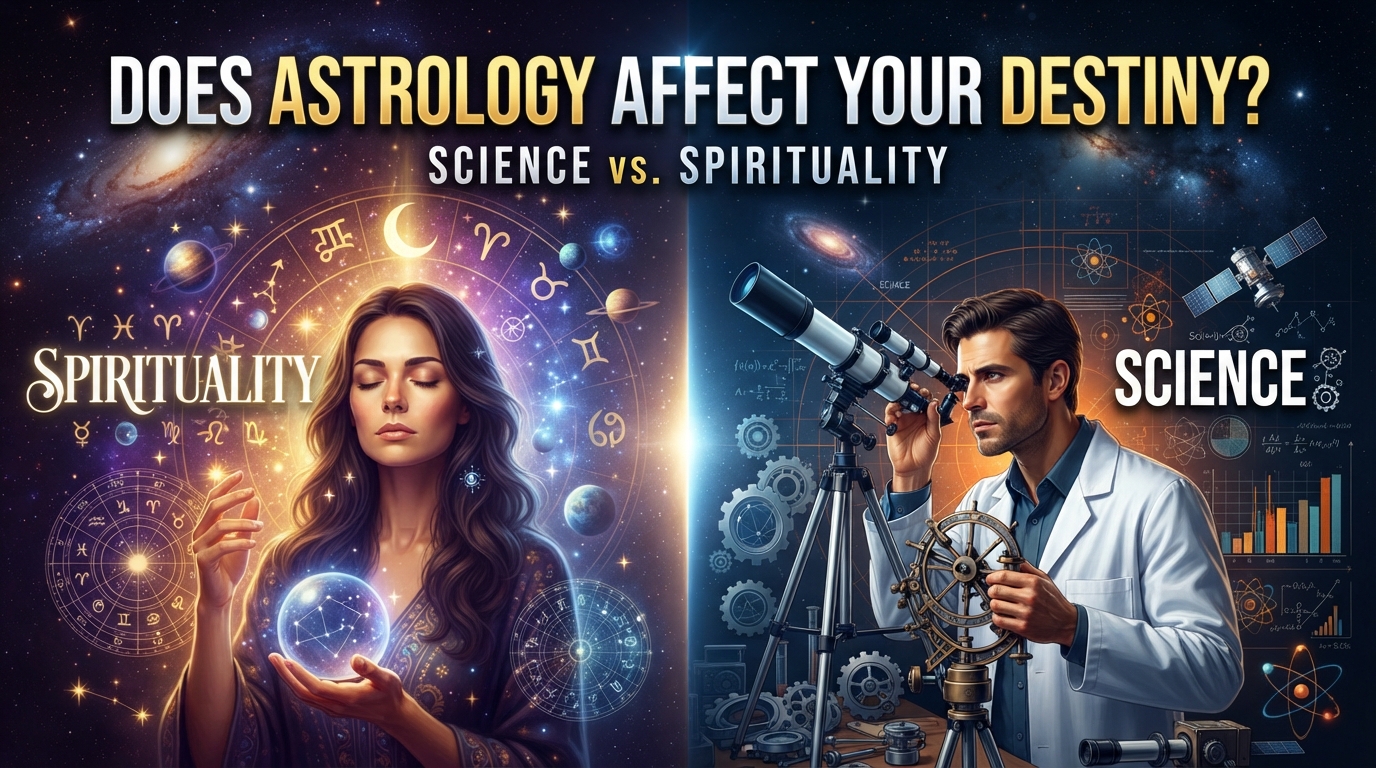
The Celestial Compass: How Astrology Can Deepen Self-Awareness and Guide Your Life Path
Introduction: Looking to the Stars for Meaning and Direction
Life rarely follows a perfectly predictable path. We face changes, uncertainty, relationships, setbacks, and new opportunities, often without knowing exactly what comes next. It is only natural, then, that people have long searched for ways to better understand themselves and the direction their lives are taking.
For thousands of years, astrology has offered one such framework. By examining the positions of the Sun, Moon, planets, and other celestial bodies, astrology seeks to interpret patterns associated with personality, relationships, emotions, and major life themes.

Astrology remains controversial. Astronomy is a recognized scientific discipline, while astrology is generally regarded as a symbolic, spiritual, or divinatory system rather than a science. Nevertheless, astrology continues to attract millions of people who use it as a way to reflect on their experiences and explore questions about identity and purpose.
Rather than treating astrology as a tool that predicts every detail of the future, it can be more useful to think of it as a symbolic map. It may encourage you to notice recurring patterns, consider different perspectives, and become more conscious of the choices you make.
In this guide, we will explore the history of astrology, the meaning of a natal chart, its role in relationships and personal growth, and how to approach modern astrology with both curiosity and healthy skepticism.
1. The Ancient Roots of Astrology: From Early Civilizations to the Western Zodiac
Astrology has a remarkably long history. Long before modern telescopes and space exploration, civilizations observed the movements of the Sun, Moon, planets, and stars and attempted to understand what those patterns might mean for life on Earth.
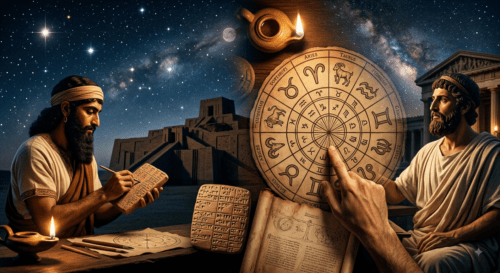
Astrology in Ancient Rome
Astrology became deeply influential in ancient Rome. Roman astrologers, sometimes referred to as mathematici, were consulted by individuals from many levels of society, including political and military leaders.
Celestial observations were sometimes used when considering important decisions, from political matters to military campaigns. Some Roman emperors even maintained relationships with astrologers and viewed celestial signs as a potential source of guidance.
At the same time, astrology was not universally accepted. Roman authorities periodically attempted to restrict astrologers, demonstrating that astrology occupied a complicated position in Roman society—both influential and controversial.
Greek Influence on Western Astrology
The Western astrology familiar to many people today developed through a combination of earlier traditions, particularly Babylonian, Egyptian, Greek, and Roman influences.
Greek thinkers played an important role in organizing astrological concepts into a more systematic framework. The twelve zodiac signs, planetary symbolism, houses, and aspects eventually became central components of Western astrological practice.
Astrology was therefore not simply about predicting isolated events. Historically, it was also connected to broader ideas about fate, character, nature, and the relationship between the heavens and human life.
When Astrology and Astronomy Shared the Same Roots
The distinction between astrology and astronomy became clearer over the course of the scientific revolution and the development of modern science.
In earlier periods, however, the two disciplines were closely connected. Astronomers needed accurate observations of celestial movements, and some historical figures associated with astronomy also worked with astrology. Johannes Kepler, for example, practiced astrology and produced astrological work alongside his groundbreaking contributions to astronomy.
This history reminds us that our modern categories did not always exist in their present form. Astrology and astronomy share an ancient history, even though their methods and standards of evidence are fundamentally different today.
2. Understanding Your Natal Chart: A Symbolic Map of Personality and Potential
The natal chart is one of the central tools of modern astrology. It represents the positions of celestial bodies at a particular time and place, usually the moment and location of a person’s birth.
Astrologers interpret these positions symbolically to explore personality traits, emotional tendencies, relationships, motivations, and recurring life themes.
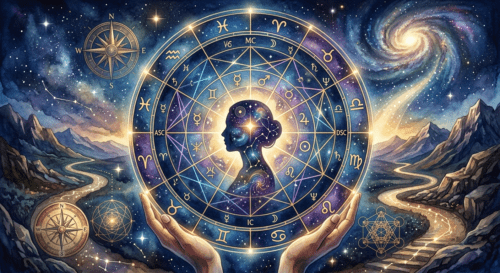
Your Sun Sign Is Only the Beginning
The Sun sign is probably the most familiar part of astrology. Aries, Taurus, Gemini, Cancer, and the other twelve zodiac signs are commonly associated with particular personality characteristics.
In astrological tradition, the Sun is often connected with identity, vitality, and a person’s sense of self.
However, a natal chart contains much more than a Sun sign. It can include the Moon, Mercury, Venus, Mars, Jupiter, Saturn, Uranus, Neptune, Pluto, the Ascendant, and various houses and planetary aspects.
For this reason, two people with the same Sun sign can have very different astrological profiles.
What Is a Horoscope?
A horoscope is a general form of astrological interpretation. Daily and weekly horoscopes are especially popular in newspapers, websites, apps, and social media.
Because these horoscopes are usually written for large groups of people based primarily on Sun signs, their interpretations tend to be broad. They should not be confused with a detailed reading of an individual’s complete natal chart.
Still, a horoscope can serve as a small daily ritual. Reading one may encourage you to pause, reflect on your emotions, or consider how you want to approach the day ahead.
The value may therefore come less from whether a prediction literally comes true and more from the reflection it inspires.
Astrology and Relationship Compatibility
Relationships are another reason people turn to astrology.
By comparing two natal charts, astrologers may explore areas of emotional connection, communication, attraction, and potential tension. This practice is sometimes called synastry.
Astrology should not be viewed as a final verdict on whether two people are destined to stay together. Human relationships are far too complex for a chart to determine their outcome.
Instead, astrological compatibility can be used as a symbolic conversation starter. It may encourage people to think about differences in communication styles, emotional needs, expectations, and personal boundaries.
Used this way, astrology can become less about finding a predetermined answer and more about developing empathy and understanding.
3. Astrology as a Tool for Self-Discovery and Personal Growth
One of the most interesting ways to approach astrology is not as a method of predicting the future, but as a framework for self-reflection.
A birth chart can provide symbolic language for exploring strengths, insecurities, emotional patterns, ambitions, and areas where personal growth may be needed.

The Lion’s Gate and the Idea of Celestial Portals
Modern spiritual astrology often places particular significance on celestial events and symbolic “portals.” One well-known example is the Lion’s Gate, traditionally associated with the period around August 8 and the relationship between the Sun, Sirius, and the constellation Leo.
Within spiritual communities, this period is often described as a time of heightened energy, manifestation, transformation, and intention-setting.
There is no established scientific evidence that the Lion’s Gate creates a special energetic portal or directly changes human consciousness. Nevertheless, symbolic occasions can still have personal value.
A particular date or ritual can provide an opportunity to pause, reassess priorities, release outdated habits, and clarify personal intentions. The psychological value of reflection does not necessarily depend on accepting the supernatural explanation behind it.
Astrology and Astronomy Are Not the Same
It is important to keep astrology and astronomy separate.
Astronomy is the scientific study of stars, planets, galaxies, and other celestial phenomena. It relies on observation, mathematical models, experimentation, and evidence.
Astrology, in contrast, interprets celestial positions symbolically and attempts to connect them with human experiences or earthly events. Its claims are not supported by the same scientific evidence or methodology used in astronomy.
The two disciplines share historical roots, but they serve very different purposes today.
Understanding this distinction allows people to explore astrology without confusing symbolic interpretation with scientific fact.
Your Birth Chart Does Not Have to Define Your Future
Perhaps the most empowering way to approach astrology is through the concept of choice.
Even within astrological traditions, a natal chart does not necessarily have to be interpreted as a rigid script. Instead, it can be viewed as a collection of tendencies, possibilities, and symbolic themes.
For example, an astrological interpretation might suggest that someone is highly independent or emotionally sensitive. That does not mean the person is incapable of changing their behavior or developing new skills.
Awareness creates room for choice.
The chart may provide a language for asking, “Why do I keep responding this way?” The individual still decides what to do with that awareness.
In this sense, astrology can function less like a prediction machine and more like a mirror.
4. Astrology in the Digital Age: Finding Meaning Without Losing Perspective
Astrology has experienced a major revival in the digital era. Birth-chart websites, smartphone apps, social media creators, and online communities have made astrological information more accessible than ever.
This accessibility can be useful, but it also makes it important to distinguish thoughtful interpretation from oversimplified content.

Astrology Apps: Useful Tool or Entertainment?
Modern astrology apps can generate birth charts, compatibility reports, daily horoscopes, and personalized notifications within seconds.
They are convenient and can be a fun introduction to astrology. However, automated readings are generally based on programmed interpretations and should not be treated as equivalent to an in-depth consultation with an experienced astrologer.
Apps can be useful for learning terminology and exploring basic concepts. For major life decisions, however, it is wiser to consider multiple sources of information rather than allowing an algorithm—or a horoscope—to make the decision for you.
The Importance of Healthy Skepticism
Enjoying astrology does not require abandoning critical thinking.
Predictions should never replace professional advice when dealing with important matters such as medical treatment, financial investments, legal issues, or major life decisions.
If an astrological interpretation feels meaningful, consider what it is prompting you to think about. Then compare that perspective with evidence, practical circumstances, expert advice, and your own judgment.
Curiosity and skepticism can exist side by side.
Astrology and Emotional Well-Being
For some people, astrology provides a comforting framework for understanding emotions and personal experiences.
Putting feelings into words can make them easier to examine. A natal chart may give someone symbolic language for discussing qualities they have struggled to understand in themselves.
For example, instead of simply thinking, “Something is wrong with me because I react so strongly,” a person might use an astrological framework to explore emotional sensitivity, boundaries, or recurring relationship patterns.
The important point is not whether the chart provides an objectively proven explanation. The value may lie in creating space for reflection and self-awareness.
Frequently Asked Questions About Astrology
| Question | Answer |
|---|---|
| What is astrology and how does it work? | Astrology is a symbolic system that interprets the positions of the Sun, Moon, planets, and other celestial bodies in relation to human experiences. Astrologers use birth charts and planetary movements to explore personality traits, emotional patterns, relationships, and potential life themes. |
| What is a natal chart in astrology? | A natal chart is a map of the sky based on the date, time, and location of a person’s birth. In astrology, it is used to explore different aspects of personality, emotions, relationships, motivations, and personal development. |
| What is the difference between a Sun sign and a natal chart? | Your Sun sign represents the zodiac sign occupied by the Sun at the time of your birth. A natal chart is much more detailed because it includes the positions of the Moon, planets, houses, and other astrological factors. Your Sun sign is therefore only one part of your complete astrological profile. |
| Can astrology predict the future? | Astrology is traditionally used to interpret possible tendencies and themes rather than guarantee specific future events. Many people use it as a reflective tool for considering possibilities and making more conscious choices rather than as a fixed prediction of what will happen. |
| Is astrology scientifically proven? | Astrology is not considered a scientific discipline, and its claims about celestial positions influencing human behavior have not been established by scientific evidence. Astronomy, by contrast, is the scientific study of celestial objects and the universe. |
| Can astrology help with relationships? | Astrology can provide a symbolic framework for exploring communication styles, emotional needs, attraction, and potential areas of tension. Compatibility readings may encourage greater self-awareness and empathy, but they cannot determine whether a relationship will succeed or fail. |
| What are astrology houses? | In astrology, the twelve houses represent different areas of life, such as relationships, career, communication, home, finances, and personal identity. Their interpretation depends on the structure of an individual’s natal chart. |
| What is the Lion’s Gate in astrology? | The Lion’s Gate is a modern spiritual and astrological concept associated with the period around August 8, when the Sun is in Leo and Sirius is traditionally highlighted in spiritual interpretations. It is often viewed as a symbolic period for reflection, intention-setting, and personal transformation. |
| Can astrology help with self-awareness? | Many people use astrology as a tool for self-reflection. Interpreting a natal chart can encourage you to examine emotional patterns, strengths, challenges, relationship habits, and personal goals from a different perspective. |
| Are astrology apps accurate? | Astrology apps can be useful for generating birth charts and learning basic astrological concepts, but their interpretations are often automated and generalized. They are best viewed as an introduction or source of reflection rather than a definitive guide to major life decisions. |
| Should I make important decisions based on astrology? | Astrology should not replace evidence, professional advice, or practical judgment when making important decisions about health, finances, legal matters, or other serious issues. It can be used as a personal reflection tool alongside reliable information and careful reasoning. |
| Does my birth chart determine my destiny? | A birth chart does not have to be viewed as a fixed script. Many people interpret it as a symbolic representation of tendencies and possibilities. Your decisions, experiences, relationships, and actions still play an important role in shaping your life. |
| Can astrology be useful even if I am skeptical? | Yes. You do not have to accept astrology as scientifically proven to use it as a reflective framework. Its symbols can sometimes prompt useful questions about personality, relationships, goals, and recurring patterns in your life. |
Conclusion: Let the Stars Inspire Reflection, Not Control Your Choices
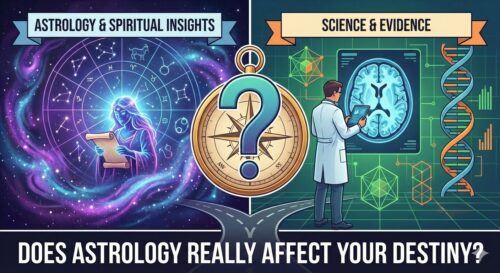
Astrology has survived for thousands of years because it continues to speak to something deeply human: our desire to understand ourselves and find meaning in an unpredictable world.
Its history stretches from ancient civilizations to today’s smartphone apps and online communities. Its symbols have evolved, but the questions behind them remain remarkably familiar.
Who am I?
Why do I behave the way I do?
What kind of relationships help me grow?
Where am I going, and what kind of life do I want to create?
Astrology can offer one framework for exploring these questions. A natal chart can become a symbolic map of personality and potential, while astrological traditions can provide prompts for reflection, intention-setting, and personal growth.
At the same time, astrology is best approached with perspective. It should not replace science, professional expertise, evidence, or personal responsibility.
The stars may provide a symbolic compass, but they do not have to determine the destination.
Ultimately, your life is shaped by your experiences, your relationships, your environment, and—most importantly—the choices you make each day. Use astrology, if it resonates with you, as an invitation to look inward, question old patterns, and become more conscious of the path you are creating.