The Era of the Wind: A Guide to Spiritual Awakening, Cosmic Energy, and a New Human Paradigm
Introduction: What Is the Era of the Wind?
Have you ever felt that something in the world is changing, even if you could not quite explain what it was?
Perhaps old beliefs no longer feel convincing. Maybe you have become more interested in intuition, inner growth, meaningful relationships, or your connection with nature. For some people, these experiences are part of a broader spiritual transition often described as the Era of the Wind.
The term is not a universally recognized scientific or historical era. Rather, it is a spiritual and symbolic concept used to describe a perceived shift in human consciousness. The image of wind is especially meaningful because wind is invisible yet powerful. It moves freely, connects distant places, and constantly changes direction.
In this sense, the Era of the Wind represents a movement toward greater flexibility, awareness, communication, and interconnectedness.
Unlike eras associated with physical power or industrial expansion, this symbolic era emphasizes the movement of ideas, information, emotions, and consciousness. It invites people to reconsider how they define success, relationships, purpose, and their place in the world.
This guide explores the spiritual meaning of the Era of the Wind, the role of cosmic symbolism, the signs associated with personal awakening, and practical ways to remain grounded while navigating a period of change.
Understanding the Era of the Wind: A Symbol of Collective Transformation
The Era of the Wind can be understood as a metaphor for a changing collective mindset.
In spiritual communities, the concept is sometimes associated with humanity moving away from fear, excessive individualism, and rigid ways of thinking toward greater empathy, cooperation, and self-awareness.
The symbolism of wind fits this idea naturally.
Wind cannot be seen directly, yet its effects are everywhere. It moves clouds, changes landscapes, carries seeds, and connects distant environments. In the same way, thoughts and ideas can travel rapidly from one person to another, influencing communities and cultures far beyond their original point of origin.
From Fixed Structures to Greater Flexibility
One of the central themes of the Era of the Wind is the idea of letting go of rigid patterns.
Many people are beginning to question traditional definitions of success, work, relationships, and happiness. Instead of automatically following established expectations, they may ask:
- What actually gives my life meaning?
- Am I living according to my own values?
- Which beliefs did I inherit without questioning?
- What kind of future do I want to contribute to?
This questioning does not necessarily mean rejecting society or tradition. It can simply mean becoming more conscious about the choices we make.
From “Me” to “We”
Another recurring theme is interconnectedness.
Modern communication has made it easier than ever for people to exchange ideas, experiences, and knowledge across geographical boundaries. From a spiritual perspective, this can be interpreted as a movement from an isolated sense of self toward a greater awareness of collective well-being.
The message is not that individuality disappears.
Rather, individuality and connection can coexist.
A healthier sense of community begins when people understand that personal well-being and the well-being of others are not always separate.
Spiritual Awakening in the Era of the Wind
If the Era of the Wind is understood as a symbolic shift in consciousness, then its most important changes begin at the individual level.
Spiritual awakening rarely looks exactly the same for everyone. For some people, it may begin with meditation or an unexpected insight. For others, it may follow a major life transition that forces them to reconsider their priorities.
Several experiences are commonly associated with this process.
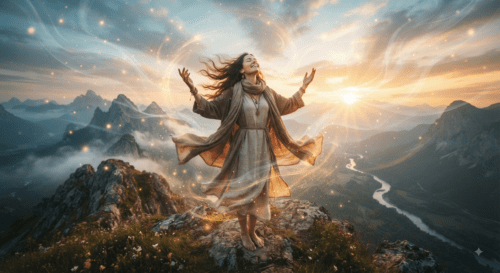
Moving Beyond Ego
The ego is not necessarily something that needs to be destroyed. It is an important part of ordinary human functioning.
The problem arises when we become completely identified with our roles, achievements, fears, or social image.
Spiritual practices can encourage us to observe these aspects of ourselves rather than allowing them to define our entire identity.
As this awareness develops, compassion may naturally become more important. We begin to recognize that other people also carry fears, hopes, disappointments, and dreams.
This can create a more balanced relationship between personal ambition and concern for others.
Intuition and Meaningful Coincidences
People exploring spiritual awakening often report stronger intuition or an increased awareness of synchronicities.
A synchronicity is generally understood as a meaningful coincidence—an event that feels personally significant even though there may be no obvious causal connection between the events involved.
For example, you may repeatedly encounter a particular idea while considering a major life decision.
From a spiritual perspective, such experiences may be interpreted as guidance from a higher self or the universe. From a psychological perspective, they may reflect heightened attention to patterns that already matter to you.
You do not have to choose one interpretation immediately.
The most useful approach is to remain curious while maintaining critical thinking.
Discovering a New Sense of Purpose
Another common feature of spiritual transformation is a change in priorities.
A career that once seemed attractive may suddenly feel empty. A forgotten creative interest may become important again. You may feel drawn toward volunteering, teaching, creating, caring for others, or spending more time in nature.
These changes do not necessarily mean that you must abandon your current life overnight.
Often, purpose develops gradually.
A small shift in how you spend your time can reveal more about your values than a dramatic decision made in a moment of excitement.
The New Human Paradigm: How Consciousness May Influence Society
The Era of the Wind is not only presented as an individual spiritual journey. Many people use the concept to imagine what a more conscious society could look like.
This vision emphasizes cooperation, sustainability, communication, and greater awareness of our impact on other people and the natural world.
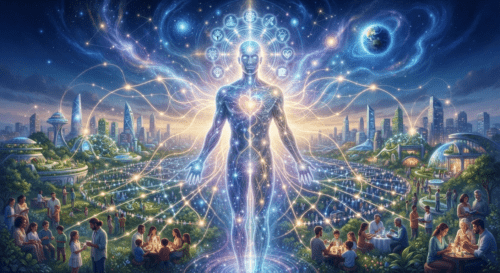
The Growth of Conscious Communities
A conscious community is not simply a group of people who share the same spiritual beliefs.
At its best, it is a community where people listen to one another, respect differences, cooperate on meaningful goals, and take responsibility for their impact.
This principle can apply to neighborhoods, workplaces, online communities, businesses, and families.
The goal is not perfect agreement.
It is learning how to cooperate without losing individuality.
Reconnecting With Nature
The symbolism of wind also reminds us that humans exist within larger natural systems.
Modern life can make it easy to forget this connection. Spending time outdoors, observing seasonal changes, or simply paying attention to the weather can restore a sense of perspective.
From a spiritual viewpoint, nature can be experienced as a teacher.
From a practical viewpoint, time in natural environments can also provide an opportunity to slow down, reduce digital stimulation, and become more attentive to the present moment.
These two perspectives do not have to conflict.
Cosmic Energy as Spiritual Symbolism
Many spiritual traditions connect periods of transformation with celestial events, planetary cycles, solar activity, or other forms of cosmic energy.
Some teachings describe these influences as energetic waves that encourage humanity to evolve.
However, claims that solar flares, planetary alignments, or specific cosmic events directly cause spiritual awakening are not established scientific facts.
It can be more useful to approach cosmic energy as a spiritual framework or symbolic language for discussing transformation.
Whether you understand these ideas literally, metaphorically, or somewhere in between, the deeper question remains the same:
How do we want to respond to a changing world?
How to Navigate the Era of the Wind in Everyday Life
You do not need to completely change your lifestyle to explore the ideas associated with the Era of the Wind.
In fact, meaningful transformation often begins with simple and practical habits.

1. Make Time for Inner Reflection
Set aside a few quiet minutes each day.
Meditation, journaling, prayer, or simply sitting without distractions can help you notice what is happening inside your mind.
Ask yourself:
What am I feeling?
What am I avoiding?
What matters most to me right now?
These questions can reveal patterns that are difficult to notice when life moves too quickly.
2. Practice Mindful Awareness
Mindfulness means paying attention to the present moment without immediately judging the experience.
You can practice it while walking, eating, drinking tea, listening to music, or talking with someone.
The objective is not to stop thinking.
It is to become more aware of your thoughts instead of automatically believing every thought that appears.
3. Build Meaningful Connections
The Era of the Wind emphasizes connection, so relationships are an important part of the journey.
Spend time with people who encourage honest conversation, mutual respect, and personal growth.
At the same time, remember that spiritual growth does not require surrounding yourself exclusively with people who share your beliefs.
Sometimes, learning to communicate respectfully with people who see the world differently is itself a powerful form of growth.
4. Explore Spiritual Practices With Discernment
Meditation, yoga, breathwork, sound practices, contemplative traditions, and energy-based practices can all become tools for self-exploration.
Experiment slowly.
Notice how a practice affects your mood, attention, relationships, and daily functioning.
You do not have to accept every spiritual claim simply because a practice feels meaningful.
Curiosity and discernment can exist together.
5. Stay Grounded
Perhaps the most important practice is maintaining a connection with ordinary life.
Eat well, sleep sufficiently, spend time with people you trust, manage your responsibilities, and remain connected to the physical world.
Spiritual exploration should ideally make everyday life richer—not make it harder to function.
If a spiritual practice causes persistent fear, confusion, distress, or significant disruption to daily life, it is wise to pause and seek appropriate professional support.
The Era of the Wind and the Future of Humanity
The idea of a new human paradigm can sound enormous, but social transformation often begins with small individual choices.

A person who becomes more emotionally aware may communicate differently with their family.
A business owner who values sustainability may change how their company operates.
A community that prioritizes cooperation may discover better ways to solve local problems.
One conscious choice may influence another person, who influences someone else.
This is where the symbolism of wind becomes especially powerful.
Wind moves invisibly.
You cannot always see where it begins, yet you can see what happens when it moves through the world.
Human ideas can work in much the same way.
A compassionate action can inspire another compassionate action. A new perspective can change a conversation. A single question can challenge a belief that has existed for generations.
The future is therefore not something that simply happens to humanity.
It is also something humanity participates in creating.
Conclusion: Embracing the Winds of Change
The Era of the Wind is best understood as a spiritual and symbolic concept rather than a scientifically established historical era.
Its central message, however, can still offer a meaningful framework for personal reflection.
The wind represents movement, freedom, communication, flexibility, and connection. These qualities can remind us that personal growth does not always require having everything figured out.

Sometimes growth means becoming willing to change.
You may release an old belief.
You may discover a new purpose.
You may learn to listen to your intuition while still thinking critically.
You may become more aware of how your choices affect other people and the planet.
And you may begin to understand that spiritual awakening is not necessarily about escaping ordinary life. It can be about becoming more present within it.
The world will continue to change, just as the wind continually changes direction.
We cannot control every movement around us.
But we can choose how we respond.
Perhaps that is the deeper invitation of the Era of the Wind: to remain flexible without losing your values, connected without losing yourself, and open to transformation without losing your grounding.
Frequently Asked Questions About the Era of the Wind
| Question | Answer |
|---|---|
| What is the Era of the Wind? | The Era of the Wind is a spiritual and symbolic concept describing a perceived shift toward greater awareness, interconnectedness, flexibility, and collective transformation. |
| Is the Era of the Wind a scientifically recognized era? | No. It is not an established scientific or historical period. It is primarily used within spiritual and metaphysical discussions. |
| What does wind symbolize spiritually? | Wind is often associated with movement, freedom, communication, change, invisible forces, and the connection between different places and people. |
| Is the Era of the Wind the same as the Age of Aquarius? | Not necessarily. The two concepts may overlap in some spiritual discussions, but they come from different symbolic frameworks and should not automatically be treated as identical. |
| What are common signs of spiritual awakening? | Increased self-awareness, changing priorities, greater empathy, questioning old beliefs, stronger interest in meaningful relationships, and a desire to live with greater purpose are commonly associated with spiritual awakening. |
| Does cosmic energy cause spiritual awakening? | Some spiritual traditions believe that cosmic events influence consciousness, but direct causal claims are not established scientific facts. Cosmic energy can also be understood as a symbolic way of describing periods of transformation. |
| How can I prepare for the Era of the Wind? | Focus on self-awareness, emotional growth, mindful living, meaningful relationships, healthy routines, and openness to learning while maintaining a grounded perspective. |
| Can intuition be trusted during spiritual awakening? | Intuition can provide useful personal insights, but it should not automatically be treated as objective truth. Combining intuition with observation and critical thinking is a balanced approach. |
| What is the most important message of the Era of the Wind? | Its central message is about adapting to change while developing greater awareness, empathy, connection, and personal responsibility. |