The Flat Earth Theory: Myths, Facts, and the Psychology Behind a Modern Conspiracy
Introduction
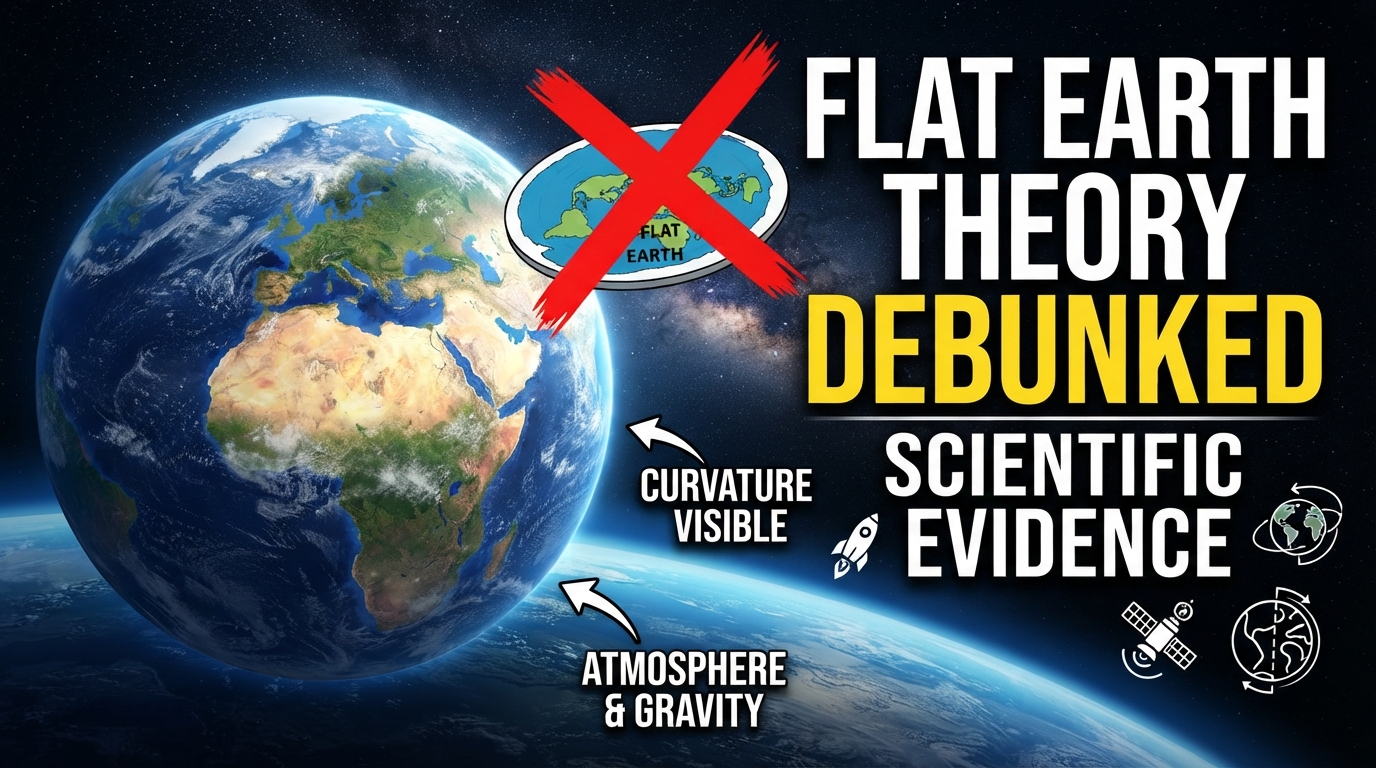
Despite overwhelming scientific evidence that Earth is a spherical planet, the Flat Earth theory continues to attract attention around the world. Once considered an outdated belief, it has experienced an unexpected revival through social media and online communities.

Supporters argue that governments, scientists, and space agencies have concealed the Earth’s true shape, while critics point to centuries of scientific research proving otherwise.
Examining this movement offers valuable insight into both scientific literacy and the psychological factors that encourage conspiracy beliefs.
A Brief History of Flat Earth Beliefs
Long before modern science emerged, many ancient civilizations pictured the Earth as flat because everyday observation seemed to support that idea. The ground appeared level, and the horizon looked straight. However, Greek philosophers such as Pythagoras and Aristotle gathered evidence suggesting that Earth was actually spherical. Observations of lunar eclipses, changing star positions, and ships disappearing beyond the horizon gradually convinced scholars that the planet was round.
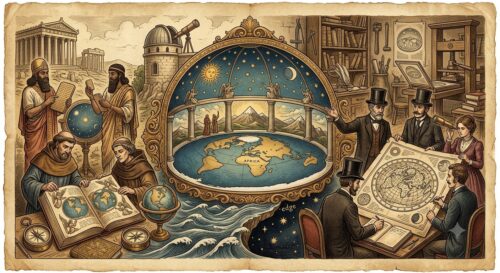
The modern Flat Earth movement began during the nineteenth century with English writer Samuel Rowbotham. His work rejected conventional astronomy and introduced a model featuring a flat Earth centered on the North Pole and surrounded by a vast Antarctic ice wall. Although his claims lacked scientific support, they inspired later generations of believers.
Interest in Flat Earth ideas expanded dramatically with the growth of the internet. Online platforms enabled supporters to share videos, organize communities, and reinforce one another’s views without relying on scientific review. As a result, the theory reached audiences far beyond traditional fringe groups.
Common Flat Earth Claims
Modern Flat Earth supporters question many principles accepted by mainstream science. One of their most common arguments concerns gravity. Rather than accepting gravity as a natural force, some claim that Earth constantly accelerates upward, creating the sensation of weight. However, this explanation fails to account for numerous observations explained consistently by gravitational theory.
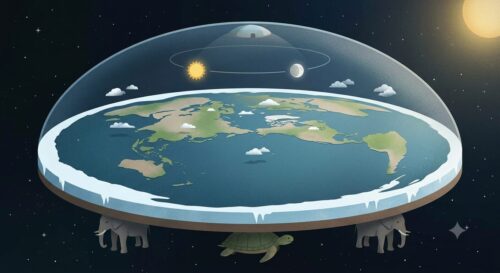
Another common belief is that the Sun and Moon are relatively small objects moving above a flat surface. According to this model, their motion creates day and night without requiring a rotating globe. Some versions also describe a transparent dome covering Earth and holding the atmosphere in place. These ideas, however, cannot accurately explain eclipses, seasonal changes, or the observed movement of celestial bodies.
Many believers also argue that Antarctica forms a giant ring of ice surrounding the world’s outer edge. They claim governments restrict access to hide the Earth’s true shape. In reality, Antarctica has been extensively explored by scientists and international expeditions, producing detailed maps and research that contradict this claim.
Scientific Evidence for a Spherical Earth
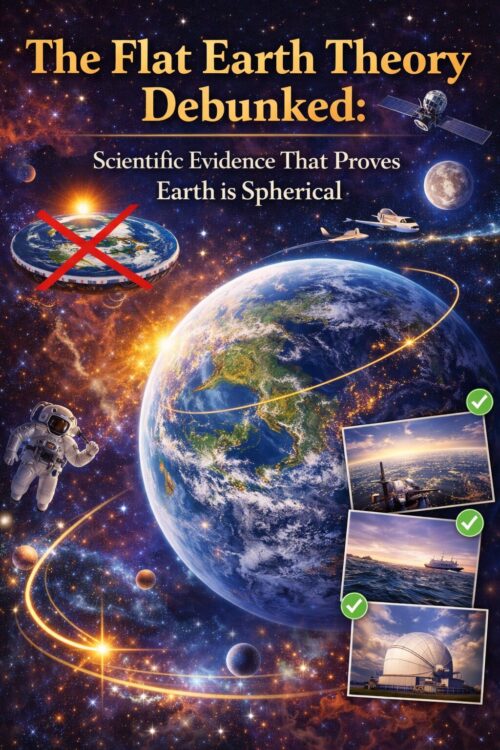
Evidence supporting a spherical Earth comes from multiple independent fields of science. One simple observation involves ships disappearing hull-first as they move beyond the horizon, consistent with Earth’s curvature. Similar effects can be seen when viewing distant mountains or city skylines.
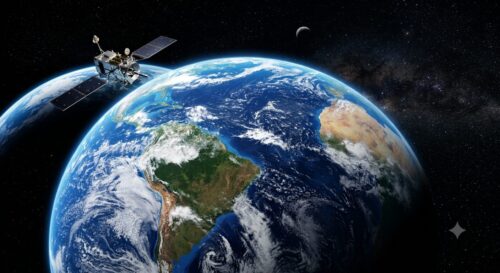
Modern navigation also depends on Earth’s spherical shape. Satellite communication, GPS technology, and international flight routes all rely on mathematical models based on a globe. These systems operate with remarkable accuracy every day, providing practical confirmation of Earth’s geometry.
Astronomy offers additional evidence. Different constellations become visible depending on latitude, while the height of Polaris changes as travelers move north or south. The changing seasons, time zones, and varying daylight hours across the globe are also naturally explained by Earth’s rotation and its orbit around the Sun.
Furthermore, photographs and videos captured by multiple space agencies, research organizations, and private missions consistently show Earth as a sphere. These observations have been confirmed repeatedly over many decades using different technologies and independent sources.
Why Some People Believe Flat Earth Theory
The popularity of the Flat Earth theory cannot be explained by science alone. Psychological and social influences play an important role in sustaining these beliefs.
Many supporters have a deep distrust of governments, scientific institutions, and major media organizations. Viewing themselves as independent thinkers, they often believe they have uncovered hidden truths that others refuse to question. This perspective can provide a sense of purpose and intellectual identity.
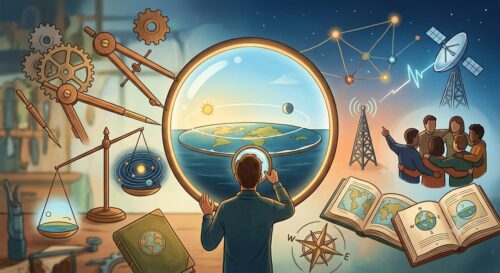
Online communities also strengthen these beliefs. Members receive encouragement from like-minded individuals, making it easier to dismiss criticism and reinforce shared ideas. As these communities grow, opposing evidence may be viewed as further proof of an alleged conspiracy.
Psychological biases contribute as well. Confirmation bias encourages people to seek information supporting their existing beliefs while ignoring contradictory evidence. Cognitive dissonance makes it difficult to abandon deeply held views, even when presented with strong scientific evidence. Together, these tendencies help explain why conspiracy theories often persist despite overwhelming factual challenges.
Conclusion
The Flat Earth theory has been thoroughly disproven by centuries of scientific observation and modern technology. Evidence from astronomy, navigation, physics, and space exploration consistently demonstrates that Earth is a rotating sphere. Nevertheless, the movement remains significant because it reflects broader issues of trust, identity, and information consumption in the digital age.
Understanding why people embrace such beliefs is often more valuable than simply dismissing them. By promoting scientific literacy, critical thinking, and open discussion, society can better address misinformation while encouraging informed curiosity about the world. Although Flat Earth theory lacks scientific credibility, its continued popularity provides an important reminder of how human psychology shapes the way people interpret reality.