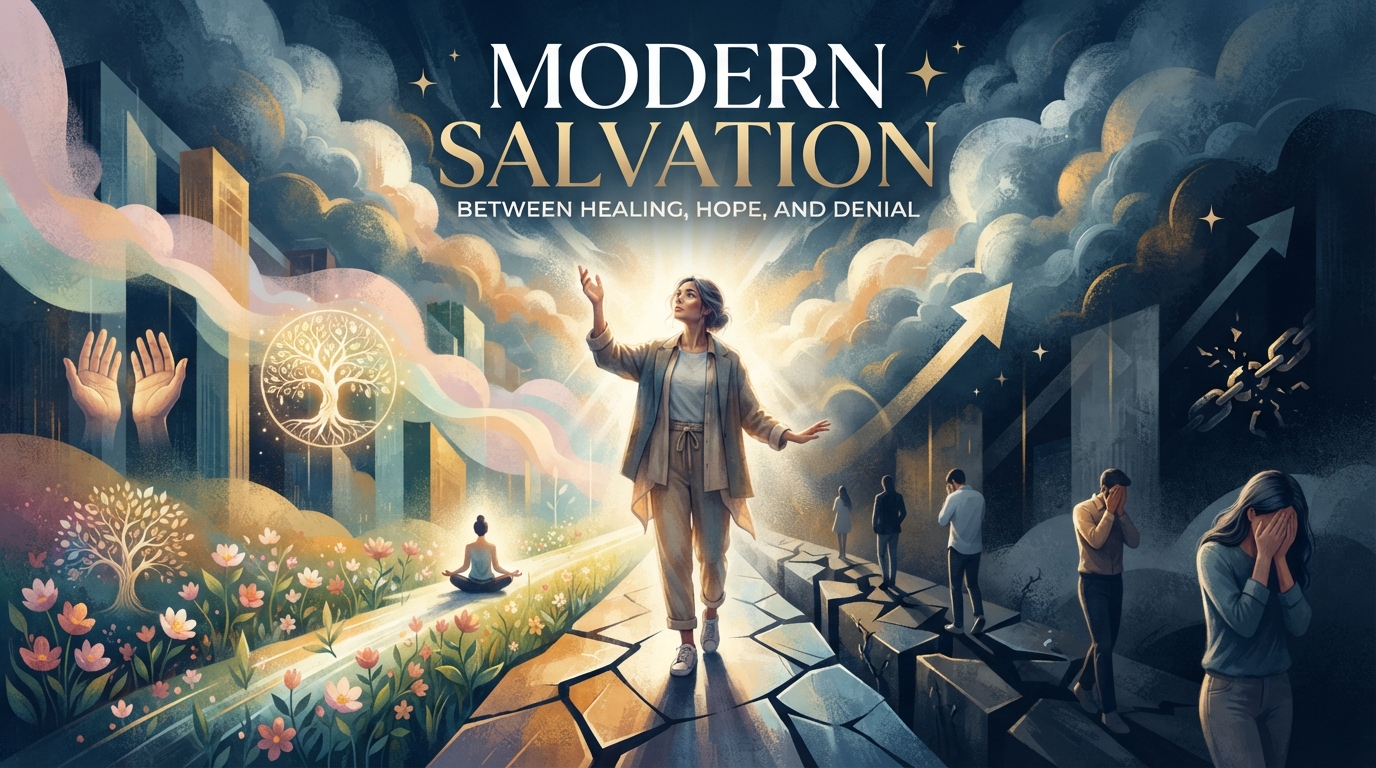
The Discomfort Behind “The Beauty of the Unconscious”
In recent years, terms like “the unconscious,” “calmness” (or nagi), and “oneness” have become increasingly prevalent.
The idea of letting go of anger and anxiety to live authentically is undeniably appealing. However, I have often found myself unsettled by a recurring observation: those who claim to be the most emotionally stable often seem the most fragile when faced with criticism.

Whenever a dissenting opinion arises, it is frequently dismissed as the other person’s problem. You’ll hear phrases like, “That’s just your projection,” “They’re having an emotional episode,” or even “It’s just a symptom of low blood sugar.”
The actual content of the critique is ignored, reduced entirely to the “state” of the person speaking it. While it’s true that some criticism is purely emotional and baseless, bypassing logical debate entirely can feel like a convenient way to silence inconvenient truths. If one were truly in a state of “calmness,” wouldn’t they be able to receive opposing views with quiet composure?
It is only natural that more people are beginning to question this trend.
The Philosophy of “Not Knowing”
I understand why these ideas spread. One particularly striking concept is the notion that “we cannot understand others, and we cannot even understand ourselves.”
The logic suggests that by repeating this, we weaken the judgment of the conscious mind and surrender to the unconscious. This supposedly makes the world appear “softer” and more manageable.

To an extent, this is true. Humans perceive the world through a highly subjective lens. If we view someone as “evil,” it may simply be a reflection of our own insecurities or anxieties. Therefore, doubting the source of one’s anger is a valuable psychological tool.
The danger arises when this mindset is pushed to the extreme—where the very act of discerning right from wrong is labeled as “ugly” or “unrefined.” When we reach that point, we lose our grip on reality. Emotional regulation and facing real-world problems should be two different things.
Realities That Effort Alone Cannot Explain
The tension in these circles often peaks during discussions about poverty. Traditional arguments like “successful people work harder” or “poverty is the result of poor saving habits” have faced significant backlash.
Real-world poverty is never that simple. It is a complex web of family environment, educational gaps, disabilities, depression, trauma, and neurodivergence. For example, someone with ADHD might struggle with impulsive spending, or someone in a depressive state might lose the cognitive capacity to manage daily life.

It isn’t just about “saving more.” This is why the words “It’s not your fault” provide such profound relief to many.
However, when this comfort goes too far, it can pivot toward “awakening” narratives—claims about oppressive social structures or the “unconscious” being the only source of truth. While these stories provide a powerful framework to explain one’s suffering, they also run the risk of fostering a new kind of dependency.
The Weight of “Words of Salvation”
What strikes me most is the sheer power of “salvation language.”
-
“You are not to blame.”
-
“You can be free.”
-
“You have simply been controlled until now.”

These words cut deep, especially when you are exhausted. For those who have spent years blaming themselves, the idea that “the unconscious will guide you” offers a sanctuary.
Yet, alongside this comfort, a sense of distrust grows. We see high-priced counseling sessions, the use of jargon to manufacture authority, and individuals claiming omnipotence after barely scratching the surface of Milton Erickson’s hypnotic techniques.
In the end, I believe people are caught in a tug-of-war between the desire to be saved and the fear of being deceived.
Spirituality, psychology, and self-improvement are meant to empower people. But the moment we try to explain every real-world problem through the “unconscious,” we enter dangerous territory.
Conclusion
Concepts like “the unconscious” and “emotional calmness” certainly have the power to lighten our burdens. It is vital to avoid being consumed by emotion and to question our own biases.

However, these are not universal answers. When we dismiss all criticism as “projection” or explain systemic social issues through spirituality alone, we drift away from reality.
Perhaps what we truly need is the balance to cultivate a peaceful mind while keeping our eyes wide open to the world as it is.