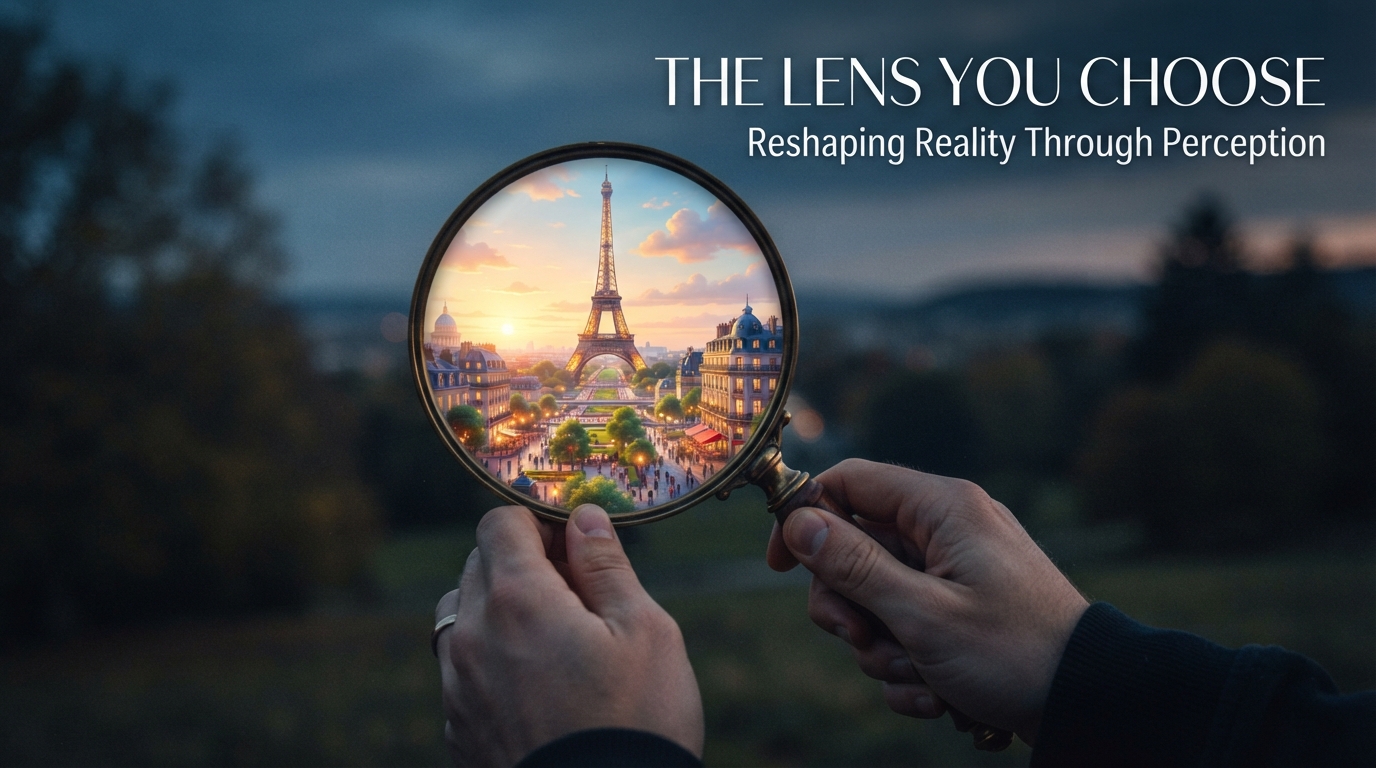
How You Perceive Your Life Changes Your Reality
Many of us have likely caught ourselves thinking, “Things aren’t working out because of my environment” or “It’s because of them.” This is often referred to as an external locus of control—placing the blame on outside forces. On the flip side, there is the internal locus of control, where one views everything as a result of their own choices.

The difference between these two isn’t just a habit of thought; it stems from how you position yourself in your own life. If you don’t view yourself as the protagonist, you naturally seek causes externally. Conversely, when you place yourself at the center of your universe, the world you see begins to shift dramatically.
However, there is a deeper layer to this discussion.
The Appeal and Perils of the “Creator” Mindset
One school of thought suggests that “reality is entirely the result of your own perception and choices.” In this view, you are the “Creator” of your world.

Adopting this perspective can be empowering. The feeling of being tossed about by others or your circumstances fades because, if everything is your choice, you regain a sense of agency and fulfillment. For many, this is the key to a positive life.
Yet, this mindset invites a difficult question: “Can I truly control everything?” When faced with unpredictable tragedies or harsh realities that seem beyond our reach, the “Creator” identity can lead to a painful contradiction: “If I am the creator, why did I let this happen?” This can inadvertently lead to deeper suffering and self-blame.
Is the Root of Suffering the “Ego”?
Another perspective suggests that the problem lies in our very definition of “self.”
In this context, the “Ego” is the image of “me” constructed by memories and past experiences. Because we try so hard to protect this ego as an absolute entity, we create friction with others, anxiety, and the need to deflect blame.
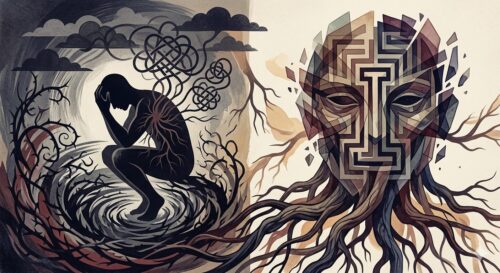
From this viewpoint, the division between “self” and “other” is considered an illusion. If the boundary between the subject (you) and the object (the world) dissolves, the entire concept of “where responsibility lies” becomes obsolete. While this may sound radical, it provides a consistent answer to the age-old question: Why do humans suffer?
Choosing “Peace” Over “Correctness”
At first glance, the idea of being a “Creator” and the idea of the “Self as an Illusion” seem to contradict each other. One maximizes personal agency, while the other seeks to let go of the “agent” altogether.

So, which is correct?
There is likely no absolute answer. What matters most is which perspective feels natural to you and which makes your reality easier to navigate. Some people find strength in being the master of their fate, while others find profound relief in loosening the grip on the concept of “self.”
Conclusion
There is no single “right” way to interpret your life.
Whether it’s accountability versus blame, the lens of the Creator, or the deconstruction of the Ego—each contains a grain of truth. The goal isn’t to adhere to a perfect theory, but to choose the viewpoint that allows you to live with the most ease.
Our mindset influences our daily experience more than reality itself. If your current way of seeing the world feels heavy, try trying on a different lens. You might find that the scenery changes more than you expected.