
The Power of Love and Harmony: A Complete Guide to Transforming Your Life
Introduction: What Do Love and Harmony Really Mean?
In a world filled with stress, conflict, and constant change, love and harmony can seem like distant ideals. Yet these concepts are not simply abstract ideas. They can shape the way we think, communicate, build relationships, and respond to the challenges of everyday life.
Living with love and harmony means more than being kind or avoiding conflict. It involves developing a deeper awareness of how our thoughts, emotions, and actions affect the people around us. Instead of viewing life entirely through the lens of personal achievement and individual success, we begin to recognize the importance of connection, cooperation, and mutual well-being.

This shift in perspective can have a meaningful impact on both personal growth and relationships. It can help us become more compassionate, strengthen our connections with others, and create communities where people feel respected and supported.
In this guide, we will explore the meaning of love and harmony, their connection with personal transformation, and practical ways to bring these principles into everyday life.
Understanding Love and Harmony: A Shift in Consciousness
At the heart of love and harmony is a change in perspective. Rather than asking only, “What do I want?”, we begin to consider questions such as, “How can we grow together?” and “What can I contribute to the well-being of others?”
This does not mean ignoring our own needs. Healthy harmony begins with self-awareness and self-respect. It means finding a balance between caring for ourselves and recognizing the value of the people around us.

Moving Beyond the Ego
The ego often encourages us to measure our worth through achievements, recognition, possessions, or the approval of others. While ambition and personal goals are not inherently negative, relying entirely on external validation can leave us feeling disconnected and dissatisfied.
A consciousness rooted in love and harmony offers another perspective. Fulfillment can also come from meaningful relationships, generosity, cooperation, and the simple experience of contributing to something greater than ourselves.
When we stop seeing every situation as a competition, we become more open to connection. Acquaintances can become friends, differences can become opportunities for understanding, and individual relationships can gradually develop into supportive communities.
The Balance Between Giving and Receiving
Many spiritual and philosophical traditions emphasize the relationship between giving and receiving. The idea is simple: when we contribute kindness, understanding, and support to the world around us, we often create conditions in which those qualities can return to us.
This does not necessarily mean that every act of kindness will be immediately rewarded. Rather, generosity can influence the quality of our relationships and the atmosphere we create around ourselves.
A sincere compliment can improve someone’s day. Listening patiently can build trust. Helping someone during a difficult moment can strengthen a relationship. Small actions can create a ripple effect that extends far beyond the original interaction.
Pleiadian Wisdom as a Spiritual Metaphor
The idea of a society based on love and harmony appears in many spiritual traditions. Within some New Age communities, the Pleiades star system is associated with beings described as spiritually advanced and focused on love, compassion, and collective growth.
There is no scientific evidence establishing these beings as factual entities, so this concept is best understood as a spiritual belief or metaphor. Nevertheless, the image can be meaningful.
It represents a vision of a world in which cooperation is valued more highly than domination and where personal development is connected to the well-being of the whole. Whether approached spiritually or symbolically, this vision can encourage us to consider what a more compassionate society might look like.
How Love and Harmony Can Transform Individuals and Communities
The principles of love and harmony are not limited to personal spirituality. They can influence the way we handle disagreements, maintain relationships, and participate in our communities.
Healing Relationships Through Understanding
Conflict is a natural part of human relationships. Differences in personality, expectations, and opinions are inevitable. Harmony does not mean eliminating these differences.
Instead, harmony means learning how to navigate differences without allowing them to destroy mutual respect.
Practicing empathy and listening carefully can reduce unnecessary tension. When people feel genuinely heard, they are often more willing to communicate openly and search for solutions.
This approach is especially valuable in a world where social and political divisions can easily turn disagreement into hostility. Choosing understanding over immediate judgment does not require us to agree with everyone. It simply gives us the opportunity to understand before reacting.
Creating a Ripple Effect of Positivity
Our emotional state can influence the people around us. A calm and considerate person can make a difficult conversation easier. A supportive friend can give someone the confidence to keep going. A simple act of kindness can inspire another act of kindness.
This is one reason why love and harmony can have a ripple effect.
We do not need to change the entire world at once. Our influence often begins with the people closest to us. The way we speak to a family member, treat a colleague, or respond to a stranger can contribute to the emotional atmosphere around us.
Small actions may seem insignificant, but repeated consistently, they can help create a culture of kindness and trust.
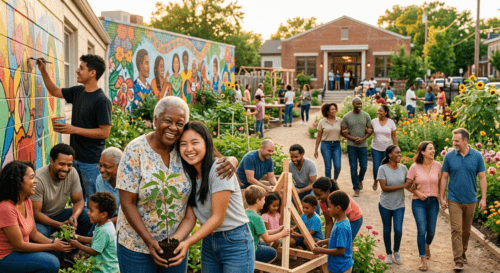
Building Resilient Communities
Strong communities are not created simply because everyone agrees. They become strong when people can cooperate despite their differences.
When individuals are willing to help one another, share resources, listen to different perspectives, and work toward common goals, communities become more resilient.
This can happen through organized projects, volunteering, neighborhood activities, or something as simple as helping a person nearby.
Love and harmony therefore have a practical dimension. They are not only feelings or spiritual concepts; they can also be expressed through everyday choices that strengthen social connections.
Practical Ways to Cultivate Love and Harmony Every Day
Living according to these principles requires practice. Fortunately, it does not require dramatic changes. Small, consistent habits can gradually transform the way we relate to ourselves and others.
1. Practice Empathy and Active Listening
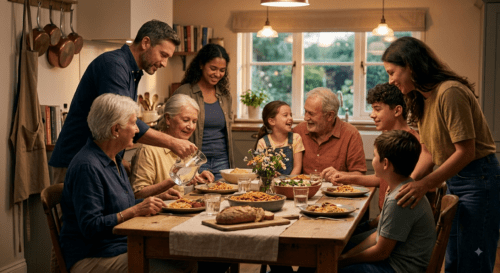
One of the simplest ways to cultivate harmony is to listen with genuine attention.
Instead of preparing your response while someone else is speaking, try to understand what they are actually trying to communicate. Ask questions when something is unclear, and resist the urge to immediately judge their feelings or perspective.
Empathy does not mean agreeing with everything another person says. It means making an effort to understand their experience.
This simple distinction can dramatically improve communication.
2. Choose Cooperation Over Unnecessary Competition
Competition can motivate us, but constant comparison can also create stress and resentment.
Whenever possible, look for opportunities to cooperate. At work, in relationships, and within your community, consider how shared goals can bring people together.
Collaboration allows different strengths and perspectives to complement one another. Instead of asking who will win, we can sometimes ask what everyone can build together.
3. Develop a Daily Gratitude Practice
Gratitude can shift our attention away from what is missing and toward what is already meaningful in our lives.
You might take a few minutes each evening to reflect on three things you appreciated that day. They do not have to be extraordinary. A pleasant conversation, a quiet morning, a good meal, or someone’s kindness can all be worth noticing.
Over time, this practice can encourage a more balanced and positive perspective.
4. Turn Love Into Action
Love becomes most meaningful when it is expressed through behavior.
Offer support when someone needs it. Check in on a friend. Help someone without expecting recognition. Volunteer your time when possible. Even a small gesture can communicate that another person matters.
The goal is not to become perfect or endlessly self-sacrificing. Healthy compassion also includes boundaries and respect for your own needs.
True harmony requires balance: caring for others without abandoning yourself.
Conclusion: Creating a More Harmonious Life, One Choice at a Time
A world shaped by love and harmony may sound idealistic, but meaningful change often begins with ordinary choices.
We can choose to listen before judging. We can choose cooperation instead of unnecessary competition. We can express gratitude, offer support, and treat people with dignity even when we disagree.
These actions may seem small, but they influence the relationships and environments in which we live.

Love connects us through empathy, compassion, and genuine care. Harmony allows different people to coexist while respecting one another’s individuality. Together, they provide a practical foundation for healthier relationships and more supportive communities.
The journey does not require us to change everyone around us. It begins with becoming more conscious of our own thoughts, words, and actions.
When we cultivate love and harmony within ourselves, we create the possibility of sharing those qualities with others.
The transformation begins with a simple choice: how will you bring a little more love, understanding, and harmony into your life today?
Frequently Asked Questions About Love and Harmony
| Question | Answer |
|---|---|
| What does love and harmony mean? | Love and harmony describe a way of living based on compassion, mutual respect, cooperation, and awareness of how our actions affect others. |
| Does living in harmony mean avoiding all conflict? | No. Conflict is a natural part of human relationships. Harmony means learning to handle disagreements through communication, empathy, and mutual respect. |
| How can I practice love and harmony every day? | Start with simple actions such as active listening, expressing gratitude, helping others, cooperating instead of competing, and responding to difficult situations with greater awareness. |
| Is love and harmony connected to spirituality? | Many spiritual and philosophical traditions emphasize these ideas, but they can also be understood from a practical perspective through psychology, relationships, and community building. |
| What is the connection between the ego and harmony? | An excessive focus on external validation or personal superiority can create separation and conflict. Becoming less dependent on these forms of validation can make it easier to develop empathy and cooperation. |
| Can one person really make a difference? | Yes. Individual behavior influences relationships and social environments. Consistent acts of kindness, respect, and cooperation can create a positive ripple effect. |