Mantras, Meditation, and Mindfulness: A Complete Guide to Ancient Practices for Modern Life
Introduction: Finding Inner Calm in a Distracted World
Modern life rarely gives us much space to slow down. Notifications, work, social commitments, and an endless stream of information can leave the mind feeling constantly switched on. Even when the day is over, it can be difficult to stop thinking about what happened or what needs to happen next.
This is one reason ancient practices such as mantras, conscious breathing, meditation, and mindfulness continue to attract people today. They do not require expensive equipment or complicated routines. Instead, they invite us to work with three things that are always available: sound, breath, and awareness.
Mantras can give the wandering mind something simple to focus on. Breathing practices can help us become more aware of the relationship between the body and the mind. Meditation can teach us to observe our thoughts without automatically following them.
These practices are not instant solutions, and they are not a substitute for professional medical care when it is needed. Their value lies in regular practice. Even a few quiet minutes each day can become a meaningful opportunity to slow down, observe yourself, and create more space between a thought and your reaction to it.
In this guide, we will explore how mantras work, why the breath is so important in meditation, what meditation actually involves, and how these practices can gradually become part of everyday life.
1. The Power of Mantras: Using Sound as a Focus for the Mind
A mantra is traditionally a word, sound, or phrase repeated during meditation or spiritual practice. Many mantras come from Sanskrit traditions and have been used for centuries as tools for concentration, reflection, and devotion.
The important point is that a mantra does not have to be understood as a magical formula. For many practitioners, its practical value comes from repetition. Instead of allowing the mind to jump endlessly from one thought to another, repetition provides a steady point of attention.
How Sound Influences Our Experience
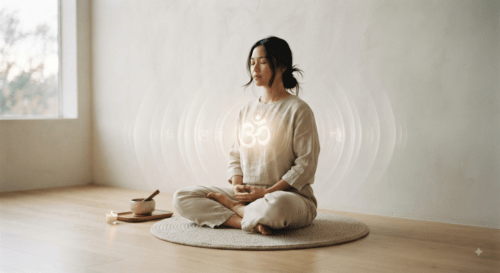
Every sound produces physical vibrations, and sound naturally affects the way we experience our surroundings. When we chant or repeat a sound, we become aware not only of what we hear but also of the sensations created by speaking, breathing, and listening.
Some people find that repetitive sounds create a calming rhythm. Others appreciate the symbolic or spiritual meaning attached to a particular mantra.
It is useful, however, to distinguish between the physical effects of sound and spiritual interpretations of those effects. Claims that a particular mantra frequency can directly transform reality or produce specific biological changes are not established scientific facts. The experience can still be meaningful without making claims that go beyond the available evidence.
A Mantra as a Mental Anchor
One of the simplest ways to understand a mantra is as an anchor for attention.
During meditation, thoughts naturally appear. You may remember something from yesterday, worry about tomorrow, or suddenly start planning what to eat for dinner. This does not mean you are meditating incorrectly. It is simply how the mind works.
Repeating a mantra gives you something to return to.
You notice that your attention has wandered, gently bring it back to the sound or phrase, and continue. Over time, this repeated process can help develop greater concentration and awareness.
How to Choose a Mantra
There are countless mantras, and different traditions give them different meanings. Beginners can start with something simple.
Om is one of the best-known sacred sounds in Indian spiritual traditions and is often used as a meditative focus.
So Hum, commonly translated as “I am That,” is associated with the natural rhythm of breathing and is often used as a reminder of connection and awareness.
You can repeat a mantra aloud, softly, or silently. The method matters less than finding an approach that feels comfortable and sustainable.
A five-minute practice that you actually maintain is more useful than an ambitious routine that you abandon after a few days.
2. The Breath: A Simple Bridge Between Body and Mind
Breathing is one of the most accessible tools in meditation because it is always with us. We normally breathe without thinking about it, yet we can also choose to pay attention to the breath whenever we need a moment of grounding.
Our breathing patterns often change with our emotional state. When we feel tense or excited, breathing may become faster or shallower. When we relax, it often becomes slower and more comfortable.
This connection makes the breath a useful object of mindfulness.

Why Conscious Breathing Can Feel Calming
Slow, comfortable breathing can encourage a sense of relaxation and help shift attention away from racing thoughts. It also gives you a concrete physical sensation to focus on.
Rather than trying to force yourself to “stop thinking,” you can simply notice the inhale, notice the exhale, and allow your attention to settle.
In traditional yoga practices, controlled breathing is known as pranayama. Different techniques have different purposes and levels of complexity, so beginners are usually better off starting with simple, comfortable breathing rather than forcing long or intense breath holds.
Abdominal or Diaphragmatic Breathing
This is a straightforward technique for becoming more aware of your breathing.
Sit or lie down comfortably. Place one hand on your abdomen and breathe gently through your nose. Allow the abdomen to expand naturally as you inhale and relax as you exhale.
There is no need to take extremely deep breaths. The goal is to develop a slow, comfortable rhythm while paying attention to the physical sensation of breathing.
Try it for a few minutes and notice whether your body begins to feel more settled.
The 4-7-8 Breathing Method
The 4-7-8 method is commonly associated with physician and author Andrew Weil. The basic pattern involves inhaling for four counts, holding for seven, and exhaling for eight.
Some people find structured breathing useful for relaxation, particularly as part of a bedtime routine. However, breath-holding can feel uncomfortable for some people. If you experience dizziness, discomfort, or anxiety, stop and return to normal breathing.
Breathing practices should feel supportive rather than forced.
From Controlled Breathing to Natural Awareness
Breathing exercises can be useful at the beginning of a meditation session, but meditation does not require you to control every breath.
Once you feel settled, simply observe your natural breathing.
Notice the air moving through your nose. Feel your chest or abdomen rise and fall. Notice the pauses between breaths without trying to change them.
At this point, the breath itself becomes the meditation.
3. Meditation: Learning to Observe the Mind
Meditation is often misunderstood as an attempt to empty the mind completely. In reality, thoughts are likely to continue appearing even during a quiet meditation session.
The practice is not about preventing thoughts. It is about changing how we relate to them.
Instead of immediately believing every thought or reacting to every emotion, meditation creates an opportunity to observe what is happening with greater distance.
You Are Not Every Thought You Have
Imagine sitting quietly and suddenly remembering an embarrassing moment from years ago. The memory triggers a thought, the thought creates an emotion, and before you know it, you are replaying the entire situation.
Meditation gives you a chance to notice this process.
You might recognize:
“I am thinking about that memory again.”
Rather than following the thought for another ten minutes, you return your attention to your breath, mantra, or bodily sensations.
This simple act of noticing can gradually create more space between awareness and automatic reaction.
Developing Emotional Resilience
Regular meditation may also help people become more aware of emotional patterns.
When something frustrating happens, the first reaction might normally be anger, fear, or irritation. With greater awareness, you may begin to recognize the emotion before immediately acting on it.
That small pause can matter.
Instead of reacting automatically, you have an opportunity to breathe, understand what you are feeling, and choose how you want to respond.
This does not mean meditation will eliminate difficult emotions. Rather, it can help you meet those emotions with greater awareness and less resistance.
Bringing Mindfulness Into Everyday Life
Meditation does not have to end when you stand up from your cushion or chair.
Mindfulness can become part of ordinary activities.
You can practice mindful walking by paying attention to the movement of your feet and the sensations in your body. You can practice mindful eating by slowing down and noticing the taste, texture, and aroma of your food.
You can even take three conscious breaths before opening an email or beginning an important task.
These small moments may seem insignificant, but they create repeated opportunities to return to the present.
4. The Benefits of a Consistent Practice
Mantras, breathing exercises, meditation, and mindfulness are not identical practices, but they can complement one another. Together, they can provide simple ways to develop greater awareness and create moments of calm throughout the day.

Supporting Mental and Physical Well-Being
Research on meditation and mindfulness has explored a range of potential benefits, including stress reduction, emotional well-being, sleep, attention, and the experience of pain.
The results vary depending on the type of practice, the individual, and the amount of practice. It is therefore better to view meditation as one useful tool for well-being rather than a universal cure.
For some people, the greatest benefit may simply be having a regular period of quiet in an otherwise busy day.
Improving Attention and Concentration
Modern life constantly competes for our attention. Phones, messages, advertisements, and multitasking make it easy to lose focus.
A mantra or the breath provides a simple way to practice returning attention to one point.
You notice the distraction, acknowledge it, and return.
That repetition is itself a form of mental training. The goal is not perfect concentration but becoming better at recognizing when your attention has wandered and gently bringing it back.
Building a Better Relationship With Yourself
Mindfulness can also change the way we relate to ourselves.
When you begin observing your thoughts without immediately judging them, you may notice how often your inner dialogue is critical, fearful, or demanding.
Meditation does not require you to replace every negative thought with a positive one. Instead, it encourages you to see thoughts as passing mental events rather than absolute truths.
With time, this perspective can support greater self-awareness and may also influence how you communicate with other people. When you become more aware of your own reactions, it can become easier to listen, pause, and respond rather than react.
Frequently Asked Questions About Mantras, Meditation, and Mindfulness
| Question | Answer |
|---|---|
| What is a mantra in meditation? | A mantra is a word, sound, or phrase that is repeated during meditation to help focus the mind. It can be spoken aloud, whispered, or repeated silently. |
| What are the benefits of using a mantra? | Repeating a mantra can provide a simple point of focus, making it easier to notice distractions and return attention to the present moment. Some people also find the repetitive rhythm calming. |
| What is the best mantra for beginners? | Simple mantras such as Om or So Hum are commonly used by beginners. The best choice is one that feels comfortable and meaningful to you. |
| Can meditation reduce stress and anxiety? | Meditation and mindfulness may help reduce perceived stress and support emotional well-being. Results vary from person to person, so meditation should be viewed as one tool rather than a universal treatment. |
| How does breathing affect meditation? | Paying attention to the breath gives the mind a steady point of focus. Slow, comfortable breathing can also encourage relaxation and make it easier to settle into meditation. |
| What is diaphragmatic breathing? | Diaphragmatic breathing is a breathing method that encourages gentle movement of the abdomen as you breathe. It can be practiced while sitting or lying down and is often used for relaxation. |
| What is the 4-7-8 breathing technique? | The 4-7-8 technique involves inhaling for four counts, holding for seven, and exhaling for eight. Some people use it as a relaxation or bedtime practice. Stop if breath-holding causes discomfort or dizziness. |
| Does meditation require clearing your mind? | No. Meditation is not about eliminating every thought. Instead, it involves noticing thoughts without automatically following them and gently returning your attention to the breath, mantra, or another chosen focus. |
| How long should beginners meditate? | Beginners can start with just 5 minutes a day. A short practice that is easy to maintain is generally more practical than a long session that quickly becomes difficult to sustain. |
| Can meditation improve concentration? | Meditation gives you repeated practice in noticing when your attention wanders and bringing it back to a chosen focus. This may support attention and concentration over time. |
| Can mindfulness be practiced without meditation? | Yes. Mindfulness can be incorporated into everyday activities such as walking, eating, showering, or preparing for work. The key is to pay attention to the present experience rather than operating entirely on autopilot. |
| What is the difference between meditation and mindfulness? | Meditation is a structured practice that often involves intentionally focusing attention. Mindfulness is a broader quality of awareness that can be practiced during meditation or ordinary daily activities. |
| Can I combine mantras, breathing, and meditation? | Yes. A simple routine might begin with a few minutes of comfortable breathing, followed by mantra repetition and a period of observing the natural breath. The practice can be adapted to your preferences. |
| How often should I practice meditation? | Consistency is more important than trying to practice for long periods. A few minutes each day can be a practical starting point, especially for beginners. |
| Are mantras scientifically proven to change reality? | There is no established scientific evidence that repeating a particular mantra can directly change external reality. However, repetition, focused attention, breathing, and meditation may influence subjective experiences such as relaxation, concentration, and emotional awareness. |
Conclusion: Start Small and Let the Practice Grow
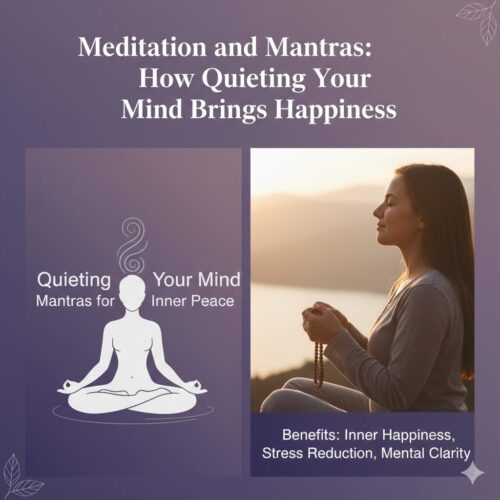
Mantras, conscious breathing, meditation, and mindfulness are ancient practices, but their basic principles remain surprisingly relevant to modern life.
You do not need to meditate for an hour every morning. You do not need to master complicated Sanskrit mantras or advanced breathing techniques.
Start with five minutes.
Sit somewhere comfortable. Take a few natural breaths. Choose a simple word or phrase if you want a mantra. When your mind wanders, notice it and gently return your attention.
That is already meditation.
The real value of these practices is not found in chasing a perfect state of peace. It is found in repeatedly returning to awareness—even when the mind is busy, emotions are difficult, or life feels overwhelming.
With patience and consistency, a few quiet minutes can become a small but meaningful space in your day: a place to breathe, observe, and reconnect with yourself.