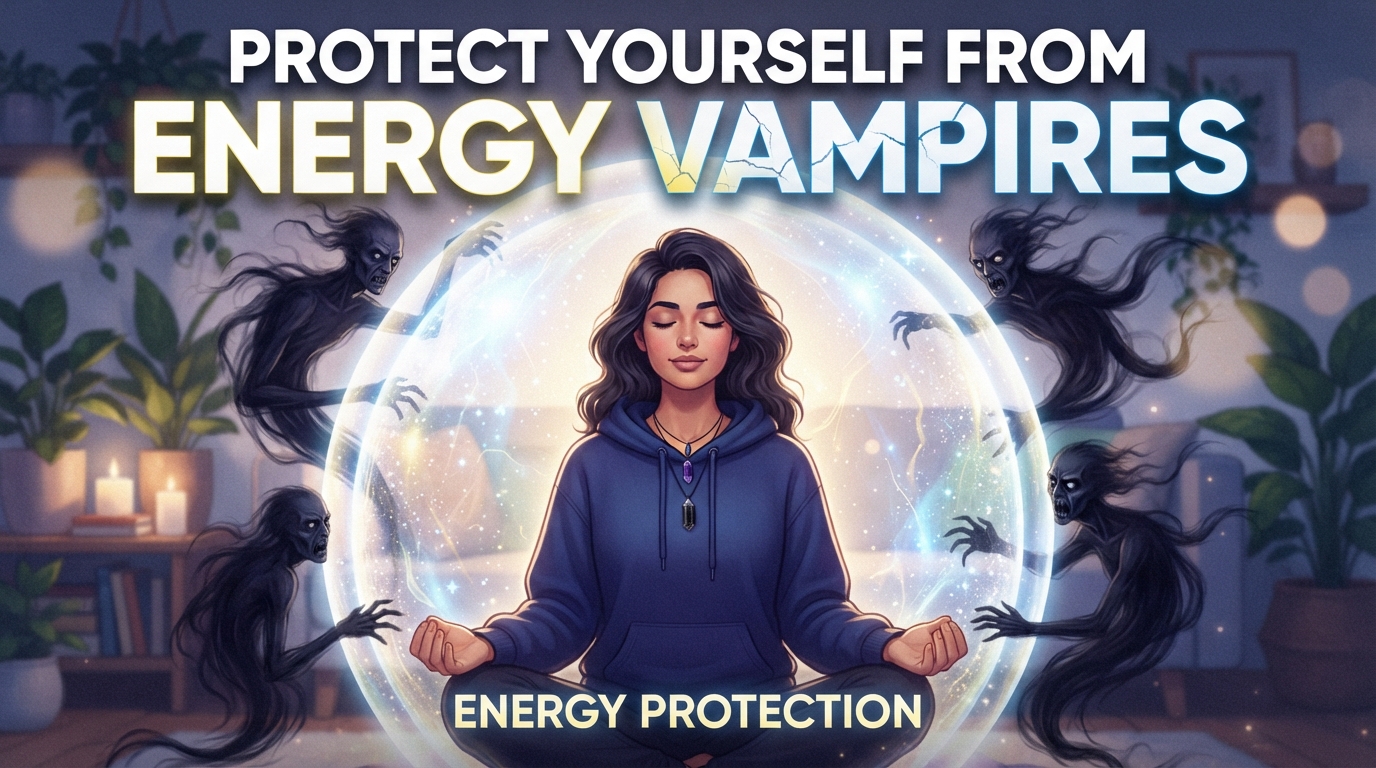
The Unseen Threat: How to Recognize, Protect Yourself From, and Recover From Energy Vampires
Introduction: When a Relationship Leaves You Feeling Drained
Human relationships can be deeply nourishing. A meaningful conversation can leave us feeling understood, encouraged, and energized. But some interactions have the opposite effect. After spending time with certain people, we may feel unusually tired, anxious, frustrated, or emotionally exhausted.
This experience is often described using the term “energy vampire.”
Energy vampires are not supernatural creatures. The expression is commonly used to describe people whose behavior consistently leaves others feeling emotionally depleted. They may demand excessive attention, complain constantly, create unnecessary drama, criticize others, or repeatedly seek reassurance and validation.
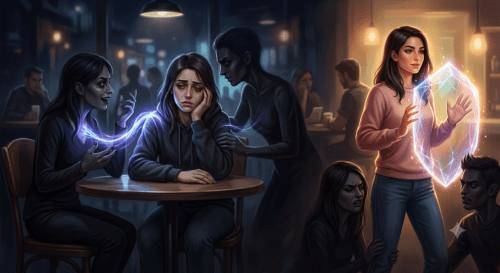
Sometimes this behavior is intentional, but often it is not. A person may simply lack awareness of how their behavior affects those around them.
The important question is not whether someone is literally “stealing” your energy. What matters is recognizing unhealthy interaction patterns and understanding how they affect your emotional well-being.
This guide explores the psychology behind draining relationships, practical ways to establish stronger boundaries, spiritual practices that some people use for emotional renewal, and strategies for building healthier and more balanced connections.
1. Recognizing the Signs: Understanding Energy-Draining Behavior
An energy-draining person is not necessarily a bad person. Everyone has difficult periods, and everyone sometimes needs extra emotional support.
The problem begins when a pattern becomes persistent, one-sided, and harmful to your well-being.

The Pattern of Emotional Manipulation
Some energy-draining relationships involve manipulation.
A person may constantly present themselves as the victim, making you feel responsible for solving their problems. They may criticize you, dismiss your feelings, create guilt when you say no, or repeatedly seek reassurance without making any effort to change their situation.
Another common pattern is conversational imbalance. The person may turn almost every discussion back to themselves, interrupt frequently, or show little interest in your experiences.
Over time, you may begin to feel that the relationship revolves entirely around meeting their emotional needs.
Recognizing this pattern is more useful than labeling the person. Instead of asking, “Is this person an energy vampire?” consider asking:
“How do I consistently feel after interacting with this person?”
Your answer can reveal a great deal.
When the Behavior Is Unconscious
Not every emotionally draining person is deliberately manipulative.
Some people struggle with chronic negativity, anxiety, insecurity, loneliness, or poor emotional regulation. They may repeatedly complain or seek reassurance without realizing how much pressure they place on others.
This distinction matters because understanding the cause does not require you to tolerate the behavior.
You can have compassion for someone’s struggles while still recognizing your own limits.
If you repeatedly leave conversations feeling exhausted, tense, discouraged, or emotionally overwhelmed, that reaction is worth paying attention to.
Energy Vampires in the Digital World
The same patterns can appear online.
Social media can create endless opportunities for validation-seeking behavior. Someone may constantly post dramatic updates, demand immediate responses, engage in online arguments, or repeatedly seek reassurance through likes and comments.
However, posting frequently or wanting attention does not automatically make someone an energy vampire.
The more important issue is whether an online interaction consistently disrupts your emotional balance. If a particular account leaves you anxious, angry, inadequate, or mentally exhausted, creating distance may be a healthy choice.
Sometimes the simplest solution is to mute, unfollow, or limit your exposure.
| Key Feature | Energy-Draining Relationship | Healthy & Balanced Relationship |
| Communication Flow | One-sided; conversations usually revert back to their problems. | Mutual; both individuals have space to listen, share, and express themselves. |
| Boundaries | Pushed, ignored, or met with guilt when you attempt to say no. | Respected; your limits and need for space are understood without conflict. |
| Post-Interaction Feeling | Mentally exhausted, anxious, frustrated, or emotionally drained. | Energized, understood, valued, and emotionally safe. |
| Problem Solving | Constant complaining without genuine interest in finding solutions. | Constructive discussions with a focus on growth and mutual support. |
2. Protecting Yourself: The Power of Healthy Boundaries
Once you recognize a draining relationship pattern, the goal should not be to defeat or punish the other person.
The goal is to protect your time, attention, and emotional well-being.

Set Clear and Simple Boundaries
Healthy boundaries are one of the most effective ways to reduce emotional exhaustion.
You do not need a complicated explanation every time you say no. Simple statements can be enough:
- “I don’t have the energy to discuss this right now.”
- “I’d rather not talk about that.”
- “I need some time for myself.”
- “I can’t help with this today.”
- “Let’s talk about something else.”
The key is consistency.
If you repeatedly establish a boundary and then abandon it because you feel guilty, the other person may learn that persistence eventually gets them what they want.
A boundary becomes meaningful when you are willing to maintain it.
Don’t Get Pulled Into Endless Conversations
Some conversations become exhausting because they repeat the same cycle.
The person complains, you offer advice, they reject the advice, another problem appears, and the conversation begins again.
You do not have to solve every problem presented to you.
Try keeping your responses short and neutral. You can acknowledge what someone is saying without taking responsibility for fixing it.
For example:
“I understand that this is difficult for you, but I’m not able to solve this for you.”
This approach allows you to remain compassionate without becoming emotionally responsible for another person’s life.
Limit Your Exposure When Necessary
Not every relationship can—or should—be ended.
You may have to interact with a difficult coworker, family member, neighbor, or acquaintance.
In these situations, reducing exposure can be more realistic than cutting contact completely.
Keep conversations focused on practical matters. Avoid unnecessary personal discussions. Reduce the amount of time you spend together when possible.
Online, you can use tools such as muting, restricting, or unfollowing to create distance without confrontation.
Protecting your peace does not make you selfish.
3. Spiritual Practices for Releasing Emotional Heaviness
Many spiritual traditions use the language of energy to describe emotional experiences and interpersonal connection.
Practices such as visualization, meditation, prayer, nature walks, and cleansing rituals can help people feel calmer and more grounded after difficult interactions.
These practices should be understood as spiritual or reflective techniques rather than scientifically established methods for removing a literal energy field or invisible attachment.

Visualizing a Protective Energy Field
One popular spiritual practice is aura shielding.
In meditation, you can imagine a soft sphere of light surrounding your body. Some people visualize white, golden, blue, or violet light.
Rather than treating the visualization as a scientifically proven shield, you can use it as a mental symbol of personal boundaries.
As you breathe slowly, imagine yourself becoming more centered and protected. You might repeat:
“I am grounded. I choose what I allow into my emotional space.”
The value of the practice may come from the sense of control and calm it creates.
Releasing Emotional Attachments
Some spiritual traditions describe difficult relationships as creating “etheric cords” or energetic connections.
There is no scientific evidence establishing the existence of literal etheric cords. However, the concept can serve as a useful visualization for people who feel emotionally attached to a past relationship.
Find a quiet place and imagine the person or situation that continues to occupy your thoughts. Visualize a symbolic cord connecting you to it.
Then imagine gently releasing or cutting that connection.
You might say:
“I release what no longer belongs in my life. My attention belongs to me.”
The purpose is not to harm or control another person. It is to symbolize emotional separation and reclaim your attention.
Restoring Your Sense of Balance
After a difficult interaction, simple activities can help you return to yourself.
Take a walk. Listen to calming music. Spend time in nature. Take a relaxing bath. Write down what you are feeling. Practice slow breathing or meditation.
You can also ask yourself:
- What am I feeling right now?
- What part of this situation belongs to me?
- What belongs to the other person?
- What do I need before continuing my day?
These questions can turn an emotionally overwhelming experience into an opportunity for self-awareness.
4. Building Healthier Relationships and Protecting Your Inner Peace
The long-term solution is not to spend your life searching for energy vampires.
It is to develop relationships in which mutual respect, emotional responsibility, and healthy communication are the norm.

Strengthen Your Relationship With Yourself
People who struggle with boundaries may sometimes feel responsible for everyone’s emotions.
They may say yes when they want to say no, apologize unnecessarily, or worry constantly about disappointing others.
Developing self-respect can gradually change this pattern.
Self-love does not mean believing that you are better than other people. It means recognizing that your time, emotions, needs, and limits deserve consideration too.
When you become more comfortable with your own boundaries, manipulation becomes easier to recognize.
Look for Mutual Relationships
Healthy relationships are not perfectly equal every day.
Sometimes one person needs more support. At another time, the roles may reverse.
The important thing is the overall balance.
Supportive relationships tend to include mutual interest, respect, trust, encouragement, and emotional reciprocity. You should be able to share your problems without feeling that you are competing for attention.
Pay attention to how you feel around people who consistently respect your boundaries.
Do you feel safe being yourself?
Can you disagree without being punished?
Can you say no without being made to feel guilty?
Can both people talk and listen?
These questions are often more useful than labels.
Choose Empathy Without Taking Responsibility for Everything
Empathy allows us to recognize another person’s pain without making that pain our own responsibility.
You can say:
“I understand that you’re having a difficult time.”
You can listen without becoming the person who must fix everything.
This distinction is essential.
Compassion does not require unlimited availability. You can care about someone and still step away from a conversation. You can understand their struggles while refusing to participate in unhealthy behavior.
Boundaries and empathy can coexist.
Frequently Asked Questions (Q&A)
Q1: How can I tell if someone is an “energy vampire” or just going through a difficult time?
A: Consider the pattern and longevity of the behavior. Everyone experiences challenging periods and needs extra emotional support. However, if the dynamic is consistently one-sided over a long period, and the person resists solutions while leaving you feeling perpetually exhausted, it is likely an energy-draining pattern rather than a temporary crisis.
Q2: Is it possible to protect my emotional energy without cutting ties with a family member or coworker?
A: Yes. You do not always need to end a relationship to protect your well-being. You can practice “low contact” by keeping conversations focused on practical topics, limiting the duration of interactions, giving short and neutral responses, and setting clear boundaries without engaging in unnecessary drama.
Q3: Does setting boundaries make me selfish or uncompassionate?
A: No. Boundaries and empathy can coexist. Setting limits allows you to care for others without becoming emotionally overwhelmed or resentful. Protecting your own mental and emotional resources ensures that your support remains healthy and sustainable.
Conclusion: Your Emotional Energy Deserves Protection
The idea of the “energy vampire” can be useful when it helps us recognize relationships that repeatedly leave us feeling emotionally depleted.
But the most important lesson is not about labeling other people.
It is about becoming more aware of our own reactions, recognizing unhealthy patterns, and learning to protect our emotional resources.
Clear boundaries, limited exposure, self-awareness, and supportive relationships can make a significant difference. Spiritual practices such as meditation, visualization, prayer, or time in nature may also provide meaningful ways to regain a sense of calm and inner balance.
You do not have to become cold or disconnected to protect yourself.
You can remain compassionate without becoming emotionally overwhelmed. You can listen without taking responsibility for someone else’s problems. You can care about others while still caring for yourself.
Ultimately, protecting your energy is another way of protecting your attention, your emotional health, and your ability to live according to your own values.
Your attention is valuable.
Choose carefully where you place it—and choose relationships that leave room for both people to grow.