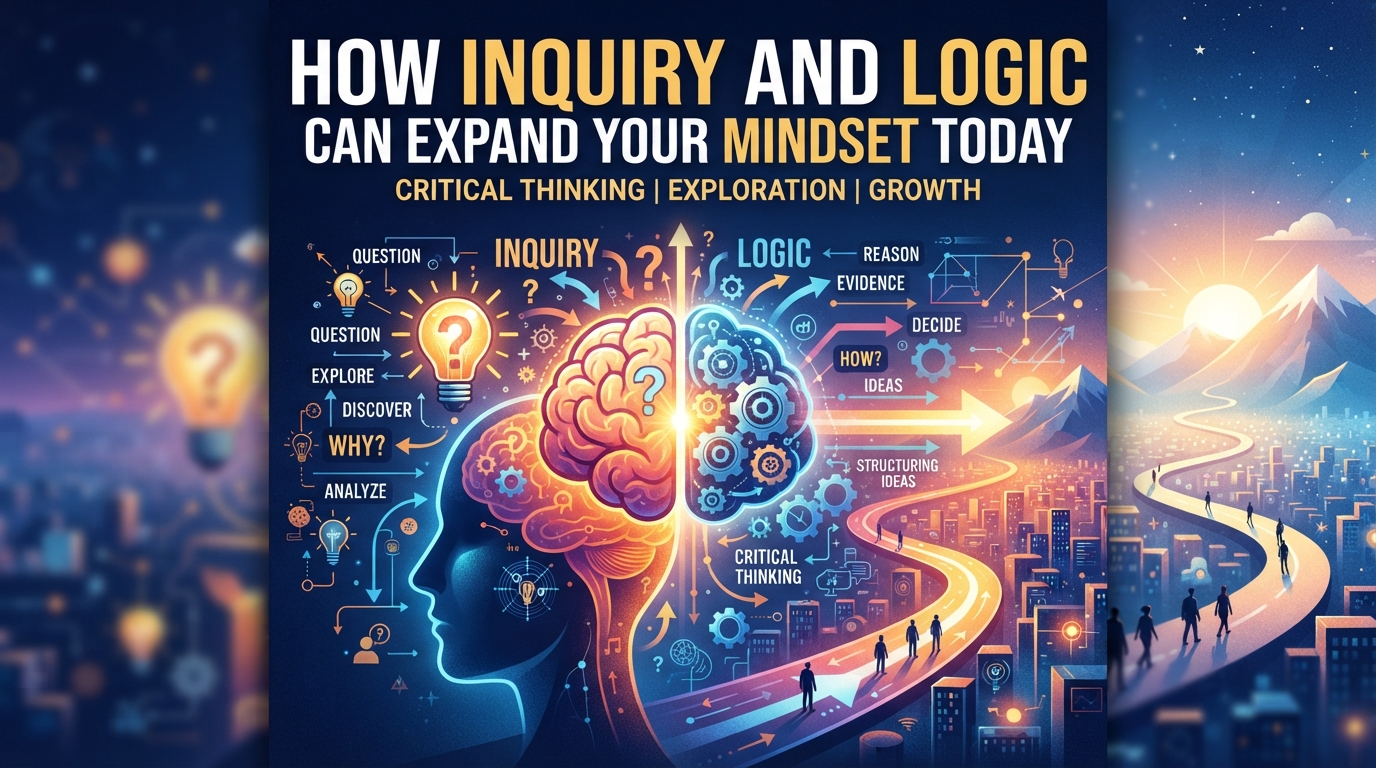
The Cognitive Toolkit: Mastering Inquiry, Logic, and Lateral Thinking for Breakthrough Solutions
Introduction: The Power of an Expanded Mindset

In our fast-paced daily lives, navigating complex challenges and making effective decisions requires more than just instinct—it demands a strategic, expanded mindset. To approach problems effectively, we must seamlessly employ a combination of inquiry thinking, logical thinking, and lateral thinking. Furthermore, the ability to embrace constructive doubt and cultivate genuine forgiveness for differing views are crucial for accelerating personal growth and mental flexibility.
This comprehensive guide explores the five key cognitive methods that will help you fundamentally broaden your thinking, allowing you to approach problems from diverse angles and unlock creative, innovative solutions in every aspect of your life.
| Cognitive Method / Pillar | Primary Objective | Key Action / Takeaway |
| 1. Inquiry Thinking | Questioning assumptions | Ask “Is this really true, and why?” to avoid relying on surface-level info or group consensus. |
| 1. Logical Thinking | Structured problem solving | Break down complex challenges into organized, sequential parts for step-by-step resolution. |
| 2. Lateral Thinking | Unleashing creativity | Shift perspectives, break conventional thought patterns, and find non-traditional solutions. |
| 3. Doubt & Forgiveness | Emotional and intellectual maturity | Use constructive doubt to drive growth; practice forgiveness to foster harmonious relationships. |
| 4. Beyond Dualism | Escaping binary traps | Avoid black-and-white thinking; recognize shades of gray to embrace balanced, multi-faceted perspectives. |
1. The Foundational Pillars: Inquiry and Logical Thinking

Mastering effective thinking begins with the essential skills of questioning assumptions and imposing structure on chaotic information.
Inquiry Thinking: Questioning Assumptions
Inquiry thinking is the deliberate process of questioning assumptions to uncover the deeper truth of any situation. Instead of passively accepting the status quo, you train your mind to ask, “Is this really true, and why?” This method is vital for avoiding decisions based solely on surface-level information or group consensus. By questioning the why and who behind a statement, you discover new perspectives and arrive at more informed insights.
Logical Thinking: Structured Problem Solving
Logical thinking provides the necessary structure to approach problems in an organized and systematic way. It involves breaking down a complex challenge into manageable, sequential parts and addressing each one methodically. For instance, when tackling a large project, logic dictates prioritizing tasks and managing time effectively. Logical thinking creates clarity, allowing you to solve problems step by step and confidently move toward verifiable outcomes.
2. Beyond the Box: Unleashing Creativity with Lateral Thinking

Lateral thinking is the advanced skill of shifting perspectives and generating non-traditional, innovative solutions that bypass conventional logic.
Generating Fresh Perspectives
Lateral thinking encourages you to look at a problem from an entirely new angle, forcing you to go beyond traditional, obvious solutions. This cognitive method is powerful because it deliberately breaks free from conventional thought patterns, allowing you to consider alternatives that might initially seem counter-intuitive.
Innovative Solutions
Consider a logistical problem: instead of trying to force a large item into a small box, lateral thinking suggests, “What if I changed the container entirely?” This flexibility in thinking is the core driver of creative and innovative solutions. By stepping outside your usual patterns, you unlock genuinely new possibilities and solutions.
3. The Ethical Mindset: Embracing Doubt and Forgiveness

Mental expansion is not purely intellectual; it requires emotional maturity, specifically the ability to question the status quo and accept human imperfection.
Doubt as a Catalyst for Growth
Doubt is a crucial part of intellectual and personal growth. It encourages you to challenge existing rules and conventional wisdom by asking, “Why does this rule exist?” or “Is this approach genuinely the best one?” This process prevents stagnation and drives continuous improvement.
Forgiveness for Harmony
Conversely, it is equally important to be forgiving. Understanding and accepting that others may hold valid, different opinions or inevitably make mistakes reduces conflict and fosters more harmonious relationships. By cultivating both doubt (for growth) and forgiveness (for peace), you create an environment of intellectual curiosity and emotional acceptance.
4. Nuance Over Extremes: Thinking Beyond Dualism

To achieve true cognitive maturity, you must recognize that most complex situations exist in shades of gray, not absolute black and white.
Escaping Binary Traps
Dualistic thinking limits your options by forcing you to choose between two extremes (e.g., “right or wrong,” “good or bad”). However, real life rarely conforms to these rigid binaries. This style of thinking oversimplifies complex reality.
Cultivating Open-Mindedness
Instead of thinking, “Person A is absolutely right, and Person B is completely wrong,” strive to consider, “Person A’s opinion is valid given their context, but Person B’s opinion also contains important merits.” Moving beyond this dualism allows you to be more open-minded, consider multiple legitimate perspectives, and find balanced, well-rounded, and equitable solutions.
Frequently Asked Questions (Q&A)

Q1: What is the primary difference between inquiry thinking and logical thinking?
A: Inquiry thinking focuses on questioning assumptions and challenging the status quo to uncover deeper truths (asking “Why?”), whereas logical thinking provides structured organization, breaking down complex challenges into manageable, sequential steps for systematic problem-solving.
Q2: How does lateral thinking help solve problems that logic alone cannot?
A: Lateral thinking deliberately breaks free from conventional thought patterns and obvious solutions. Instead of forcing a traditional approach, it shifts your perspective entirely—such as changing the container rather than forcing a large item into a small box—to unlock creative breakthroughs.
Q3: Why are both doubt and forgiveness necessary for an ethical and progressive mindset?
A: Constructive doubt acts as a catalyst for growth by pushing you to question outdated rules and prevent stagnation. Simultaneously, forgiveness accepts human imperfection and differing opinions, reducing conflict and cultivating relational harmony.
Q4: What is the danger of dualistic thinking, and how do we overcome it?
A: Dualistic thinking forces complex situations into rigid binaries (like “right or wrong” or “good or bad”), which oversimplifies reality. We overcome this by embracing nuance, recognizing shades of gray, and valuing multiple legitimate perspectives within their unique contexts.
Summary: The Future of Flexible Thinking
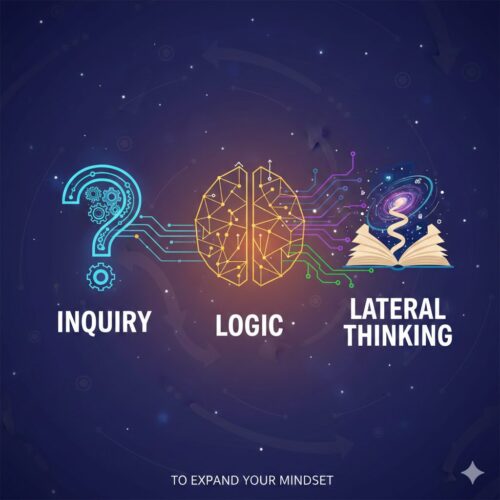
By intentionally embracing inquiry thinking, logical thinking, and lateral thinking, you gain the essential tools to approach complex problems from multiple vantage points and consistently discover better solutions. Furthermore, cultivating the balance between constructive doubt and genuine forgiveness enhances both personal growth and relational harmony. Finally, moving beyond rigid dualistic thinking opens up new possibilities and fosters deep understanding. Approach every challenge with this flexible, multi-faceted mindset, and your future will be defined by endless opportunities for insight, success, and continuous cognitive expansion.