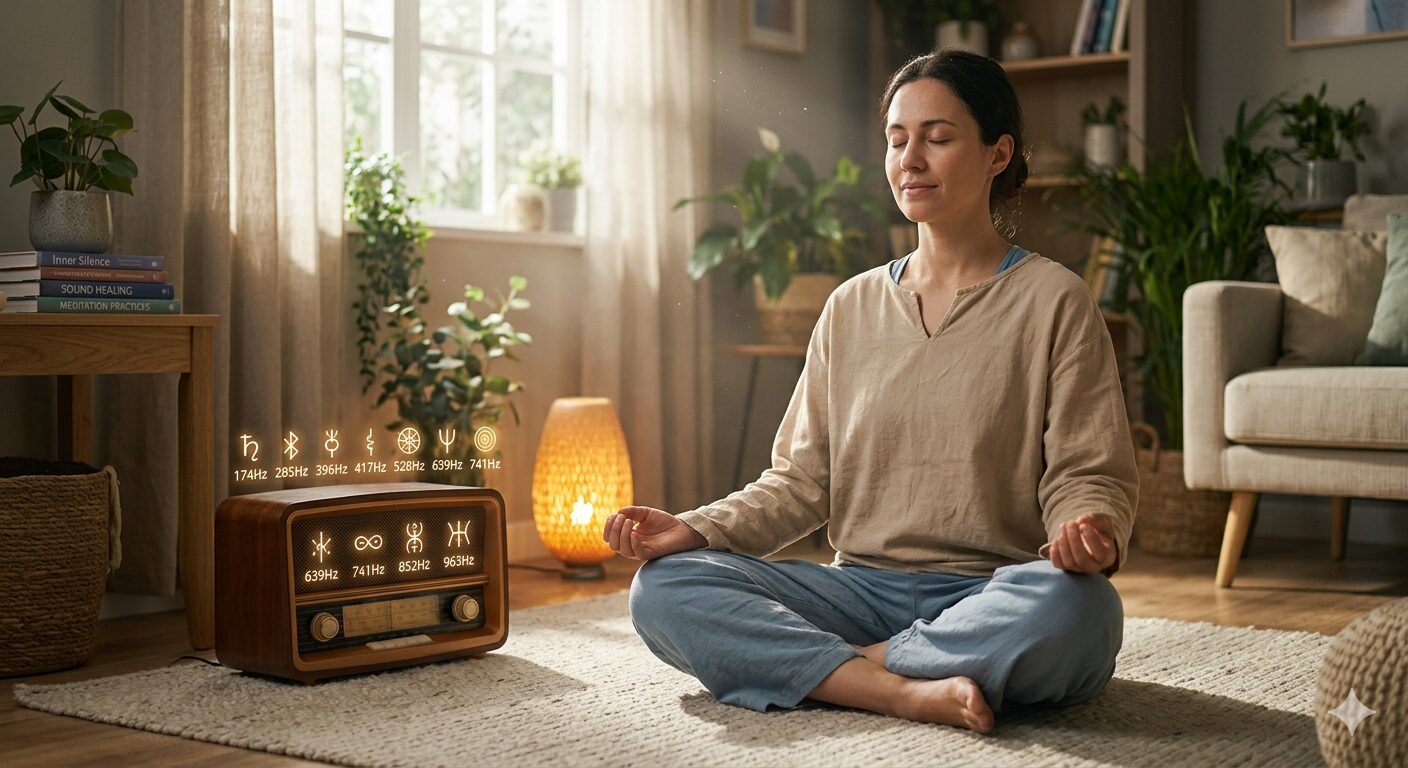
The Mystery of Solfeggio Frequencies: Why Do These “Healing Tones” Captivate Us?
In recent years, a quick search on YouTube or Spotify reveals a growing phenomenon: Solfeggio Frequencies.

With titles promising “DNA Repair,” “Emotional Cleansing,” or “Awakening Intuition,” these tracks—often tuned to specific frequencies like 528Hz, 396Hz, or 963Hz—have garnered millions of views. But what is it about these mathematical tones that draws people in?
It’s clear that for many, this isn’t just “relaxing background music.” There is a deep-seated hope that sound itself might have the power to transform our bodies and our lives.
528Hz: The So-Called “Miracle Frequency”
Of all the Solfeggio tones, 528Hz is undoubtedly the superstar. Often referred to as the “Miracle Frequency,” it is frequently associated with:
-
Cellular regeneration and DNA repair
-
Transmutation of negative energy
-
Emotional and physical stability

While mainstream science has yet to provide definitive proof for these claims, the anecdotal evidence is staggering. Many users report feeling a profound sense of calm or enhanced focus. Some even share more dramatic stories—like a person suffering from severe back pain who found relief after looping 528Hz tracks. Whether it’s a physical shift or a powerful placebo, the psychological urge to “clutch at straws” when in pain is a very real, human experience.
The “Slow Medicine” of Sound
Interestingly, the most dedicated practitioners of Solfeggio frequencies argue that there are no “quick fixes.” Unlike a pill that works in 30 minutes, these frequencies are often viewed as a form of long-term mental cultivation. Common sentiments include:
“You need a maturation period.”
“It only holds meaning if you stay consistent.”

The prevailing theory among enthusiasts is that the benefits accumulate over time, gradually shifting one’s mental state. Some even suggest that beginners feel the effects most intensely, while regular listeners may eventually “plateau.” This mirrors the practice of mindfulness and meditation—it’s not just about the sound itself, but how we choose to receive it and hold space for it in our daily lives.
Binaural Beats and “Out-of-Body” Experiences
In the deeper corners of the Solfeggio community, these tones are often paired with Binaural Beats. This combination is said to induce altered states of consciousness, leading to some truly “out there” testimonials:
-
Facilitating astral projection (Out-of-Body Experiences)
-
A sensation of detaching from the physical form
-
Vivid, hyper-realistic auditory hallucinations
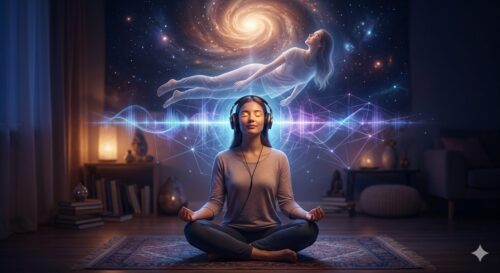
At this level, we transition from the realm of wellness into the subjective world of the occult. Since the brain is highly susceptible to suggestion during deep relaxation or pre-sleep states, it’s understandable why people experience these “miracles.” Yet, even within the community, many remain “skeptical believers”—practicing the routine while acknowledging that the mind’s power of suggestion (the placebo effect) may be the primary driver.
The Skeptic’s Take: Technical and Scientific Hurdles
Despite the popularity, skeptics and audiophiles raise valid points regarding the technicalities:
-
Mathematical Ambiguity: Is there really a difference between 7.8Hz and 8Hz in a spiritual context? Skeptics argue the definitions are often too abstract.
-
Compression Issues: Does a highly compressed YouTube MP3 even retain the “pure” frequency required for healing? Many argue that the loss of data in digital files negates the intended effect.
-
The “A=440Hz” Debate: Much of the Solfeggio movement stems from a rejection of the standard tuning (A=440Hz), claiming it is “disharmonious” with nature—a claim that is historically and scientifically debated.

Conclusion: A Mirror of Modern Fatigue
Whether Solfeggio frequencies are a profound biological tool or a beautifully packaged placebo, their rise tells us something important about our current era.
We live in an age of high anxiety and constant digital noise. The desire to “tune” ourselves, to find balance through simple vibrations, is a natural response to the exhaustion of modern life. At its core, the Solfeggio movement isn’t just a trend—it’s a reflection of a collective search for peace, healing, and a way to quiet the mind in a loud world.