
Why Some People Feel Sharper When Fasting: The Connection Between Hunger and Mental Clarity
“I Can Focus Better When I Don’t Eat”
You’ve likely heard this claim before. For many who practice intermittent fasting or a light diet, it’s a common refrain: “My senses feel sharper,” “Anxiety fades away,” or “My intuition just clicks.”
While extreme dietary restriction requires caution, the core idea—that what and how much we eat directly impacts our mental state—is an experience shared by many.

In our modern world, the digestive system is rarely at rest. Between overeating, constant snacking, and late-night meals, our bodies and brains stay locked in a perpetual “processing mode.” Conversely, when we enter a state of hunger, many report that the mental “noise” begins to subside. It feels similar to the sudden burst of inspiration one might experience in the quiet stillness of midnight.
The Gut-Brain Connection: Does the Stomach Rule the Mind?
In recent years, “gut health” has become a mainstream topic, shedding light on the profound link between our digestive tract and our mental well-being.
It is now widely known that a significant portion of the body’s serotonin—the hormone responsible for stabilizing mood—is produced in the gut. The idea that stress, anxiety, and mood swings are tied to our internal microbiome is no longer a fringe theory.
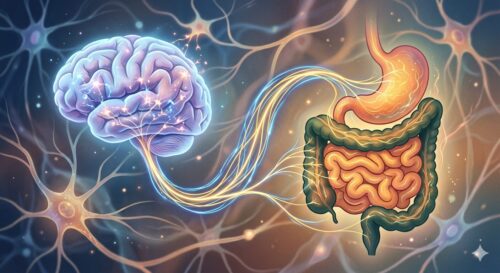
This is precisely why proponents of fasting place such high value on “giving the gut a rest.” Most of us have experienced the lethargy, mental fog, or poor sleep that follows a period of overindulgence. On the flip side, we’ve all had days where a lighter meal makes the entire body feel more buoyant and energetic.
Online communities frequently discuss how “overeating leads to cluttered thoughts,” while “hunger leads to emotional stability.” Beyond the more radical philosophies of “breatharianism,” there is a grounded reality to the fact that our diet shapes our consciousness.
The “Shift” in Senses During Fasting
What’s particularly fascinating is the consistency of experiences reported by those who fast:
-
Heightened Senses: Smells, sounds, and colors seem more vivid.
-
Altered Perception of Time: A sense of being more present in the moment.
-
Reduced Emotional Turbulence: Feelings of anger or restlessness begin to thin out.
-
Creative Flow: Ideas flow more effortlessly without the usual mental blocks.

These accounts are remarkably consistent, From a biological standpoint, this is often attributed to ketosis. When the body runs low on glucose, it begins breaking down fat into ketones for energy. For many, this metabolic shift results in a “clear-headed” feeling and a natural suppression of hunger pangs.
While results vary by individual—and for some, fasting may simply lead to fatigue—the sensation of “shifting consciousness” through hunger is a common thread among practitioners.
The Appeal of “Eating Less” as Self-Development
Historically, fasting has always been held in high regard. From religious asceticism and meditation to Zen practices, “abstinence from food” has long been intertwined with spirituality and focus.

Even today, many creators and entrepreneurs swear by the “hungry state” for deep work and problem-solving. Perhaps we are drawn to this not just for the health benefits, but for the sense of self-mastery it provides.
Appetite is one of our most primal instincts. Being able to observe and control that urge provides a powerful sense of autonomy. While some take this into the realm of the supernatural, the most practical takeaway is simple: refining our relationship with food refines our thoughts and moods.
Summary
Fasting and mindful eating have been recognized for centuries as tools for mental transformation. Today, we have the added context of science—gut-brain axis research, ketosis, and brainwave studies—to help explain these shifts in focus and perception.

The key isn’t necessarily to pursue extreme or superhuman goals, but to recognize the tangible impact of our diet on our daily lives. Rethinking overconsumption, letting the digestive system rest, and embracing a little hunger might just be the simplest way to rediscover a sense of clarity in a noisy world.